 ultimate-guide
Tequila Tasting Guide for Beginners: Sip Like a Pro
Table of Contents
- What Tequila Actually Is (and Why It Matters for Tasting)
- Blanco vs Reposado vs Añejo: The Three Styles You'll Taste
- How to Taste Tequila: A Step-by-Step Walkthrough
- Reading Tequila Tasting Notes Without Feeling Lost
- Building a Beginner Tasting Flight and Worksheet
- Spotting Additives vs Real Agave Character
- Tequila and Food Pairing: What to Serve Alongside
- Tasting Responsibly: Palate Prep and Pace
- Frequently Asked Questions
Last Updated: October 20, 2026
What Tequila Actually Is (and Why It Matters for Tasting)
Tequila is a distilled spirit made from the blue Weber agave plant, legally produced only in specific regions of Mexico (Isotopic Characterization of 100% Agave Tequila (Silver, Aged and Extra-Aged Class) for...).
Tequila is an agricultural product, not a flavored spirit. The cooked agave heart is the flavor backbone, you taste agave first, then everything the producer did to it.
At The Corner Kick Cantina, our curated tequila selection is built around that idea: guests should notice the roasted agave first.
Blanco vs Reposado vs Añejo: The Three Styles You'll Taste
The three styles you will encounter most are blanco, reposado, and añejo, and they differ mainly by time in oak barrels.
Barrel time changes color and flavor: blanco stays clear with bright agave, citrus, and pepper; reposado picks up gold color plus vanilla and caramel from the oak; añejo turns amber and richer, with deeper sweetness.
| Style | Barrel Time | Color | Typical Notes | Best For Beginners |
|---|---|---|---|---|
| Blanco | None to very short | Clear | Cooked agave, citrus, pepper | Learning pure agave flavor |
| Reposado | Rested in oak | Pale gold | Vanilla, caramel, softer agave | A gentle step up |
| Añejo | Aged longer | Amber | Oak, caramel, dried fruit | Sipping slowly |
| Extra Añejo | Aged longest | Deep amber | Rich oak, sweetness | Dessert-style sipping |
Start with blanco. It is the honest one. If you can taste and enjoy blanco, you understand what tequila actually is, and every aged style after that makes more sense.
A Beginner Flight Plan You Can Pour Tonight
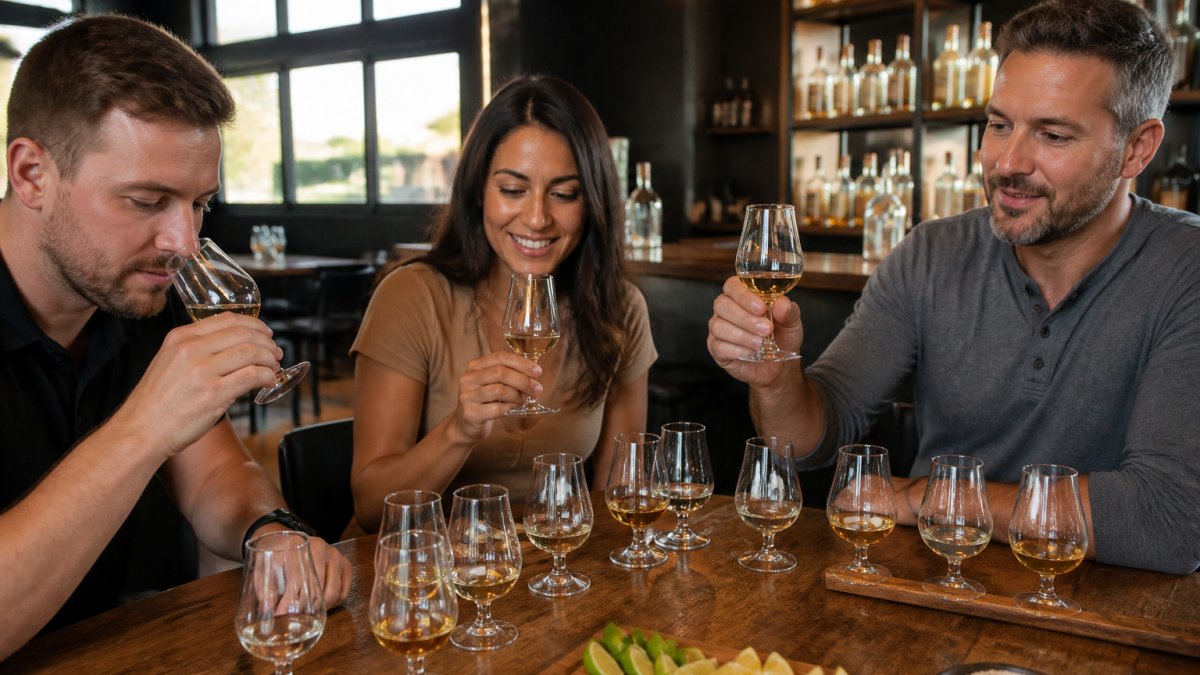
A flight forces comparison, and comparison is how a palate develops. Here is a simple three-pour plan:
- Pour order: blanco first, reposado second, añejo third. Going light to dark keeps oak from coating your palate before you have tasted the agave.
- Pour size: about half an ounce each. Three half-ounce pours is a tasting, not a drinking session.
- Pause between pours: water and a plain cracker, thirty seconds or so, then move on.
- Compare on purpose: after all three, go back to the blanco. The oak notes in the aged pours stand out more clearly against the bright agave of the first glass.
- Optional fourth pour: add an extra añejo last to test the aging curve, does more barrel time read as complexity or just sweetness to you?
Label Literacy Before You Pour
A few label terms change what you are about to taste:
-
"100% de agave" (or "100% blue Weber agave"): the bottle is made entirely from agave sugars. Bottles without this wording are "mixto," meaning up to a portion of the fermentable sugar can come from other sources. For a tasting, 100% agave is the baseline, it is the only way to taste the plant clearly.
-
NOM number: the four-digit distillery registration printed on the label tells you which distillery made the bottle. Two brands with different names can share a NOM, which is a useful clue when two pours taste suspiciously similar.
-
"Reposado" and "añejo" are legal aging categories, not marketing words. Reposado must rest in oak for a set minimum period, añejo must age longer, and extra añejo longer still, so the label category is a reliable guide to what is in the glass.
Read the label, then taste. If a 100% agave blanco tastes sweet and flat with no vegetal note, note it on your worksheet, it is a clue about production, not a failure of your palate.
How to Taste Tequila: A Step-by-Step Walkthrough
Learning how to taste tequila comes down to three repeatable steps: set up your glass and pour, look and smell, then sip and note the finish.
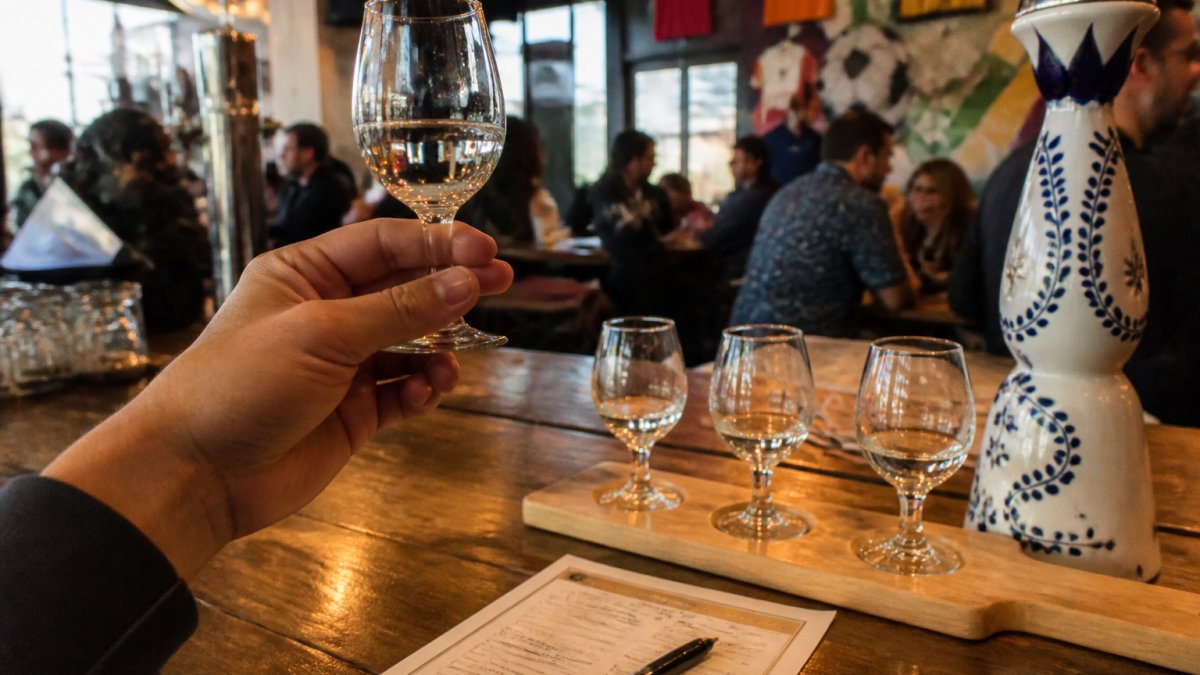
Step 1: Set Up Your Glass and Pour
Use a small glass with a narrow opening, like a copita, the stemmed glass used in Jalisco tasting rooms, or a small wine glass, so aromas collect instead of escaping. Avoid shot glasses: the wide mouth lets ethanol dominate.
Pour roughly a half ounce, enough to coat the palate and read the aroma without overwhelming your nose. Room temperature serves tequila best; cold mutes the aroma.
Step 2: Look, Swirl, and Sniff
Hold the glass to the light and note color and clarity. Blanco should be clear to very pale; reposado and añejo should show gold to amber, with depth roughly tracking barrel time, though caramel coloring is permitted in some categories, so color alone is not proof of age.
Swirl gently, then sniff from just below the rim, not straight down into the glass. Short sniffs protect your nose. Look for cooked agave, citrus, herbal notes, and pepper before you sip.
Step 3: Sip, Savor, and Note the Finish
Take a small sip and let it coat your tongue. Hold it a second, then swallow and breathe out slowly through your nose.
A useful habit: rate the finish as short, medium, or long. A long, agave-driven finish is one of the clearest signs of a well-made spirit; a short, sweet finish that vanishes quickly is a clue worth writing down.
Troubleshooting What You Taste
First-time tasters often blame themselves when a pour tastes harsh or flat, but the cause is usually mechanical. How to adjust:
- Alcohol burn overwhelms everything: your pour is too large or too cold, or you are sniffing too deep. Pour less, let it warm, and take shorter sniffs.
- Everything tastes the same: palate fatigue has set in. Water and a plain cracker between pours reset your palate; after four or five pours, your notes stop being reliable.
- A pour tastes flat and sweet with no agave: this can be a sign of added sweeteners masking the plant character, or simply a style built for mixing. Note it and move on.
Pacing and Palate Prep
Responsible tasting starts before your first sip. Eat something beforehand, drink water between pours, and plan how you are getting home. A tasting is about attention, not volume. Skip strong coffee, heavy spice, or cigarettes right before you taste, since they dull your senses. If you are hosting, keep pours small and offer food alongside.
Reading Tequila Tasting Notes Without Feeling Lost
Tasting notes are just vocabulary for what your nose and palate already detect. When a label says "cooked agave," "earthy," or "vegetal," those describe real sensations, you are not failing if you do not taste every word.
Here is how to translate common tequila tasting notes into plain language:
- Cooked agave: sweet, roasted, slightly caramelized plant flavor
- Vegetal or earthy: green, soil-like, fresh
- Citrus: lemon, lime, grapefruit brightness
Use your own words first, then borrow the vocabulary. If you taste "roasted sweet potato," write that down. Your notes are for you. The official language is just a shared shorthand.
Building a Beginner Tasting Flight and Worksheet
A tasting flight is a small lineup of pours tasted side by side so you can compare them directly.
Print or copy this worksheet and fill it in as you go. It turns a casual sip into a real comparison.
Beginner Tasting Worksheet
- Bottle name and style: __________
- Color and clarity: __________
- First aroma (agave? citrus? herbal?): __________
Repeat the block for each glass. By the third, you will notice patterns you would have missed one glass at a time.
Spotting Additives vs Real Agave Character
Real agave character tastes like the plant: roasted, earthy, a little green, with a natural sweetness that is not sugary. Some producers add sweeteners or flavorings that mask the agave, and telling the difference is one of the most useful skills a beginner can build.
Watch for these signals:
- Processed sugar or cotton candy sweetness with no agave behind it
- Marshmallow or vanilla that tastes artificial rather than barrel-derived
- A flat, syrupy mouthfeel where agave brightness should be
None of this means an additive-free bottle is automatically better to your taste. It means you should know what you are tasting. When the sweetness has no agave backbone, that is a clue worth noting on your worksheet.
Tequila and Food Pairing: What to Serve Alongside
Tequila and food pairing works best when you match intensity, not just flavor. Blanco's citrus and pepper cut through rich, savory food, reposado's vanilla and caramel bridge to grilled meats, and añejo's oak and dried-fruit notes suit richer bites.
For a beginner spread, keep it simple:
- Blanco: tacos with fresh salsa, citrus-marinated dishes, grilled fish
- Reposado: grilled chicken or steak, roasted vegetables, mild cheese
- Añejo: dark chocolate, caramel desserts, rich braised dishes
At The Corner Kick Cantina, our scratch-made Mid-West Mex menu is built for exactly this kind of pairing. Locally made yellow maiz tortillas and all-natural meats give you a sturdy base that stands up to agave spirits without fighting them.
Tasting Responsibly: Palate Prep and Pace
Responsible tasting starts before your first sip. Eat something beforehand, drink water between pours, and plan how you are getting home.
Palate prep matters too. Skip strong coffee, heavy spice, or cigarettes right before you taste, since they dull your senses.
That is the whole approach. Taste the agave first, compare side by side, write it down, and pair it with food that respects what is in the glass.
Frequently Asked Questions
What is the proper way to taste tequila for beginners?
Pour a small amount into a tulip-shaped tasting glass and let it sit for a minute. Look at the color and clarity, swirl gently, then sniff from just below the rim rather than plunging your nose in. Take a small sip, hold it on your palate for a few seconds, and note the finish. Start with a blanco before moving to reposado and añejo so the oak aging doesn't overwhelm your palate early.
What is the best tasting tequila for beginners?
Start with a 100% blue Weber agave blanco. Blancos skip or barely touch oak, so you taste cooked agave, citrus, and pepper without barrel influence. Once that profile feels familiar, move to a reposado for vanilla and caramel notes, then an añejo for deeper oak character. Avoid mixto bottles for tasting purposes, since added sugars can mask the agave character you're trying to learn.
How do blanco, reposado, and añejo tequila taste different?
Blanco is unaged or lightly rested and tastes of cooked agave, fresh citrus, herbal notes, and black pepper. Reposado rests in oak barrels for at least two months, picking up vanilla, caramel, and a rounder mouthfeel. Añejo ages at least one year and brings deeper oak, dried fruit, and baking spice. Extra añejo goes beyond three years for the richest, most barrel-forward pour.
Should tequila be sipped neat or served with salt and lime?
For a tasting, sip it neat at room temperature. Salt and lime are a shooter ritual that numbs the palate and hides the agave character you're trying to identify. Save the salt-and-lime routine for a quick shot if you enjoy it, but keep your tasting glasses clean so each pour shows its real flavor profile.
What foods pair well with tequila?
Blanco works with bright, citrusy dishes like ceviche, fresh tacos, and grilled fish. Reposado's vanilla and caramel notes suit pork, roasted vegetables, and mildly spiced dishes. Añejo stands up to richer fare such as braised beef or dark chocolate. Keep spice moderate during a tasting so capsaicin doesn't dull your palate before the next pour.
How many tequilas should you sample in one tasting?
Three to four pours is a comfortable range for a beginner flight. A classic lineup is one blanco, one reposado, and one añejo, which shows how aging changes the same spirit. Keep each pour small, take notes between glasses, and drink water alongside. Beyond four pours, palate fatigue sets in and your tasting notes start repeating themselves.
Why do people lick salt before drinking tequila?
The salt-and-lime ritual comes from shot culture, not tasting culture. Salt dampens bitterness and lime cuts the burn, which helped early mixto tequilas go down fast. With a 100% agave tequila served neat, that ritual covers up the cooked agave, citrus, and pepper notes you want to notice. Try your first sip without salt and see what the spirit actually tastes like.
Ready to put this into practice? The Corner Kick Cantina pairs a carefully curated tequila selection with scratch-made Mid-West Mex food in a lively, welcoming space built for good company. Bring a friend for a beginner flight, ask our team to walk you through the pours, or book the space for your next group tasting. Book today and start sipping like you know what you are looking for.