 ultimate-guide
History of Mexican Food in the Midwest
Table of Contents
- Ancient Roots: Mesoamerican Origins of Mexican Cuisine
- The Columbian Exchange and European Influence
- Mexican Food in the 20th Century: From Border States to National Cuisine
- What Is Midwest Mex Cuisine and How Did It Develop
- Authentic Mexican Food vs. Midwest Mex: Understanding the Distinction
- Migration Patterns and the Rise of Mexican Food in the Heartland
- Mexican Food Culture in the Midwest Today
- Frequently Asked Questions
Last Updated: October 8, 2026
Ancient Roots: Mesoamerican Origins of Mexican Cuisine
Mexican cuisine didn't emerge from a single moment. It developed across thousands of years, shaped by the indigenous civilizations that inhabited Mesoamerica long before European contact. The history of Mexican food in the Midwest begins with understanding these ancient foundations, because the dishes that eventually migrated northward carry DNA from cultures that thrived centuries ago.
The Aztecs and Mayans built sophisticated agricultural systems that domesticated crops still central to Mexican cooking today. Maize, beans, and chili peppers weren't just food, they were the foundation of survival and cultural identity. These staple crops fed empires and shaped every meal that followed.
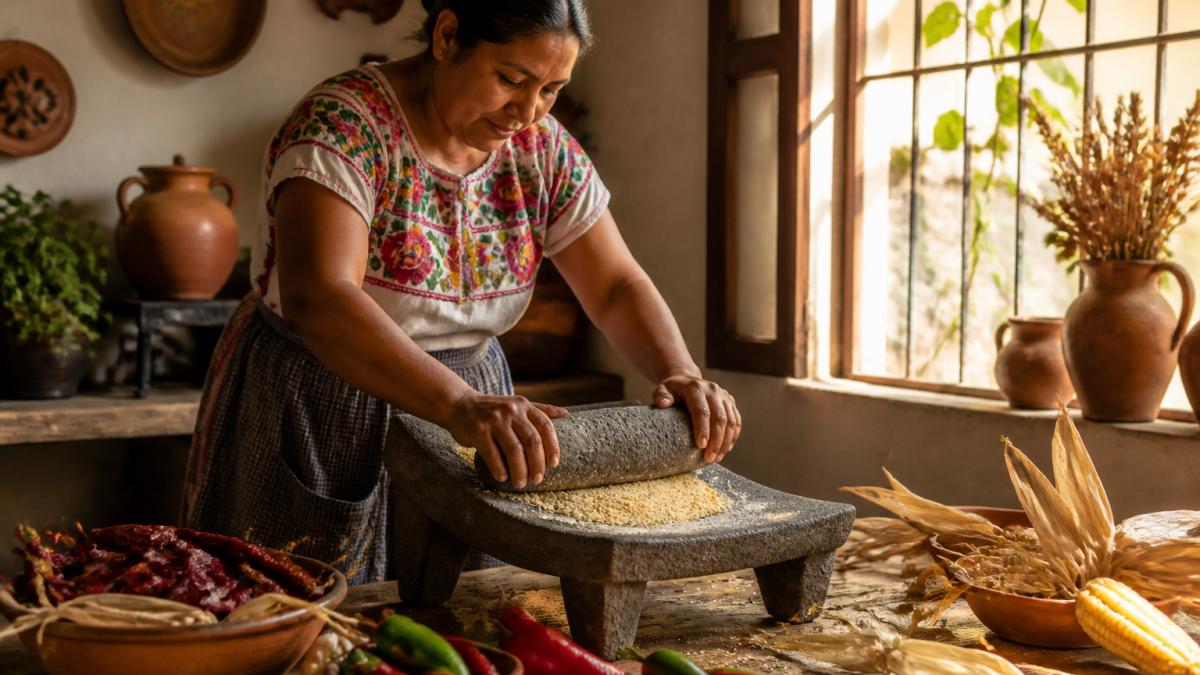
The indigenous peoples of Mesoamerica developed cooking techniques that remain largely unchanged. Stone grinding, clay cooking vessels, nixtamalization of corn, these methods weren't primitive experiments. They were refined practices perfected over generations. The flavor profiles that define Mexican food today trace directly back to these pre-Hispanic traditions, which is why authentic Mexican cuisine carries such depth and complexity.
The Columbian Exchange and European Influence
When Spanish colonizers arrived in the Americas, they brought ingredients and techniques that permanently altered Mexican gastronomy. The Columbian Exchange wasn't a one-way transaction, it was a collision that created something entirely new. Pork, beef, chicken, dairy, and wheat entered the culinary landscape, forcing indigenous cooks to adapt their methods while preserving their identity.
This cultural fusion created what we now recognize as Mexican food. The Spanish introduced animals for meat production, but indigenous cooks applied their own techniques and flavor sensibilities. They wrapped Spanish-influenced fillings in corn tortillas. They combined European livestock with native chili peppers and maize. The result wasn't Spanish food or indigenous food, it was a hybrid that belonged to neither and both.
For nearly 300 years, this evolution happened under Spanish colonial rule. Mexican cuisine developed regional variations as different areas incorporated local ingredients and adapted to their geography. Coastal regions emphasized seafood. Mountain areas relied on game and preserved meats. These regional differences would later influence how Mexican food took root in different parts of the United States.
Mexican Food in the 20th Century: From Border States to National Cuisine
The 20th century transformed Mexican food from a regional cuisine into a national and eventually international phenomenon. The Mexican Revolution (1910-1920) forced massive migration northward. People fled violence and economic collapse, carrying their culinary traditions with them. They settled in border states, Texas, California, Arizona, New Mexico, where Mexican food could thrive without completely abandoning its roots.
In border communities, Mexican food became a bridge between cultures. It was affordable, familiar, and satisfying. It fed workers in agriculture, mining, and construction. Restaurants and food vendors emerged to serve these communities, creating a new category of Mexican-American cuisine that honored tradition while adapting to available ingredients and local preferences.
By mid-century, Mexican food was spreading beyond border states. The post-World War II economic boom created mobility. People migrated for jobs. Soldiers returned from service with memories of Mexican food. Tourism to Mexico increased. Suddenly, Mexican cuisine wasn't confined to the Southwest, it was becoming a national culinary tradition.
What Is Midwest Mex Cuisine and How Did It Develop
Midwest Mex is not a marketing term invented in the last decade. It is a real regional adaptation with identifiable causes, and the clearest way to see it is to compare it to Tex-Mex.
Tex-Mex grew up along a shared border with continuous two-way traffic. Its signature ingredients, yellow corn tortillas, melted yellow cheese, chili gravy, cumin-heavy ground beef, flour tortillas, reflect that proximity and the ranching economy of South Texas.
Four forces shaped it:
1. Distance from the ingredient supply chain. Fresh Mexican ingredients, tomatillos, fresh chiles like jalapeños and serranos, epazote, queso fresco, crema, had to be trucked in or grown locally. In the 1950s and 1960s, that meant substitutions. Dried chiles (guajillo, ancho, pasilla, chile de árbol) traveled better than fresh ones, so Midwest Mexican home cooking leaned harder on toasted-and-rehydrated chile sauces than on fresh salsas. That is a real flavor difference, not a compromise.
2. Dairy and beef availability. The Upper Midwest was dairy country, and the packinghouses of Chicago, Kansas City, and Omaha made beef cheap and abundant.
3. Corn and wheat. The Midwest grows both, and locally milled corn masa and locally made corn tortillas became a point of regional pride.
4. Winter. Cold-weather cooking pushed Midwest Mexican food toward stews, braises, and slow-simmered sauces.
What Midwest Mex is not is a watered-down version of the real thing. The technique is the same: nixtamalized corn, dried chiles toasted and rehydrated, meat braised low and slow, salsas made from scratch. What changed is the sourcing and the seasonal rhythm.
Authentic Mexican Food vs. Midwest Mex: Understanding the Distinction
The distinction between authentic Mexican food and Midwest Mex isn't about one being "better" than the other. It's about understanding how cuisine evolves when it travels and adapts to new environments.
Authentic Mexican food, as prepared in Mexico, reflects centuries of tradition, regional specificity, and access to ingredients that define each area's culinary identity. Oaxacan food differs from Yucatecan food, which differs from coastal preparations. This diversity exists because Mexican cuisine is deeply connected to place, to the specific crops, animals, and cultural influences of each region.
Midwest Mex takes the principles of authentic Mexican cooking and applies them within the constraints and possibilities of the American Midwest. It uses the same fundamental techniques, nixtamalization, slow cooking, careful spice balancing, but sources ingredients locally. It respects the traditions while embracing regional adaptation. Neither approach is inauthentic.
The key difference lies in intentionality. Midwest Mex doesn't compromise on technique or quality because of geography. It simply makes different choices about sourcing, based on what's available and what makes sense for the region. This is how all regional cuisines develop, through adaptation, not abandonment, of core principles.
Migration Patterns and the Rise of Mexican Food in the Heartland
Most histories of Mexican food in the United States stop at the border states. The Midwest story is different, and it starts with labor.
The first significant wave arrived during the Mexican Revolution (1910-1920), but those migrants overwhelmingly settled in Texas, California, Arizona, and New Mexico. The Midwest wave came later and was driven by industrial demand. During World War I, railroads like the Atchison, Topeka and Santa Fe and the Chicago, Milwaukee, St.
The bigger shift came during and after World War II. The Bracero Program, a series of bilateral labor agreements that ran from 1942 to 1964, brought roughly 4.6 million Mexican contract workers into the United States, and a meaningful share of them were assigned to Midwestern agriculture and rail work (Historical Documents).
The neighborhoods that formed are the real map of early Midwest Mexican food:
- Chicago's Near West Side and Pilsen. Mexican families began settling around Hull House and St. Francis of Assisi Church in the 1920s, drawn by rail and packinghouse jobs. Pilsen became the cultural anchor after the 1960s, when urban renewal and the construction of the University of Illinois at Chicago displaced families from the Near West Side.
- Detroit's Mexicantown. Auto plant jobs pulled families to southwest Detroit, and Bagley Street became the commercial spine. The neighborhood's identity was strong enough that it survived the city's later economic collapse.
- Kansas City's Westside. The Santa Fe Railroad's shops and the stockyards drew Mexican workers to the Westside, where the Guadalupe Centers, founded in 1919 and among the oldest continuously operating Mexican-American community organizations in the country, anchored the neighborhood.
- St. Louis, Milwaukee, and Omaha. Smaller but durable communities grew around rail yards, tanneries, packing plants, and foundries. Omaha's South Omaha stockyards and packinghouses drew Mexican workers in the 1910s and 1920s, and the community that formed there is one of the oldest in the region.
Restaurants followed the neighborhoods. The earliest were often informal: a woman cooking tamales or enchiladas out of her home kitchen and selling them to neighbors and coworkers, then graduating to a storefront.
That is the mechanism the generic histories miss: Midwest Mexican food did not arrive as a finished cuisine and then get watered down. It arrived as home cooking in labor camps and parish halls, scaled up through family businesses, and only later became a restaurant category.
Mexican Food Culture in the Midwest Today
The history of Mexican food in the Midwest has created a unique culinary landscape. Mexican food is no longer exotic or unfamiliar, it's woven into the region's food culture. But the story isn't finished.
Today's Midwest Mex represents a maturation of that mid-20th-century adaptation. Cooks understand both their heritage and their region deeply enough to honor both. They source locally without sacrificing quality. They prepare traditional dishes with modern techniques. They celebrate Mexican culinary traditions while acknowledging that they're cooking in the Midwest, for Midwest communities.
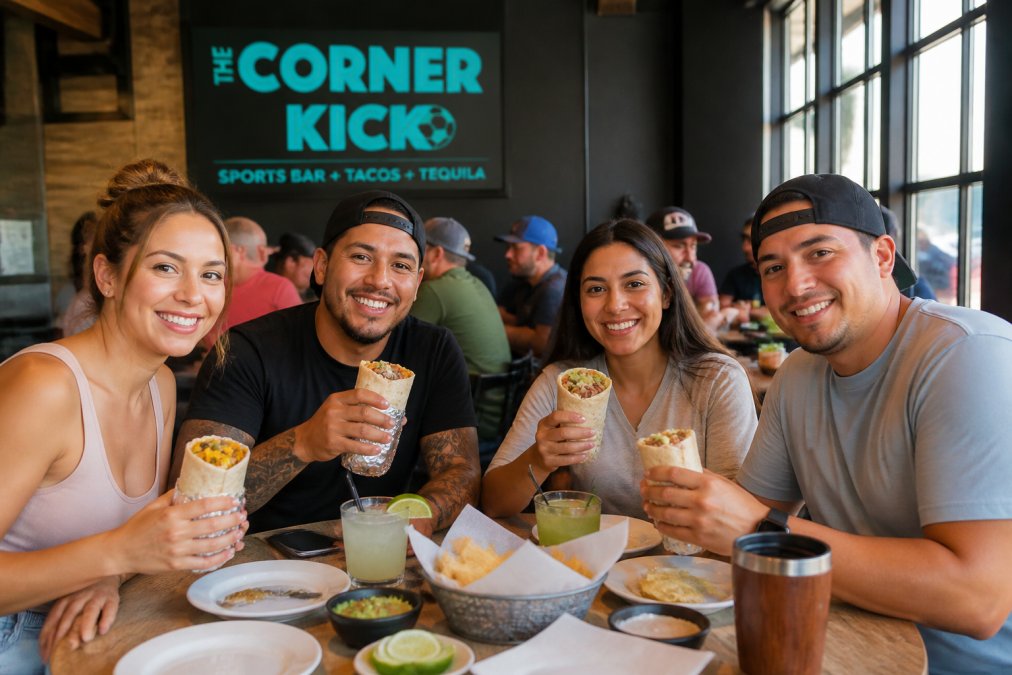
At The Corner Kick Cantina, we understand this history intimately. Our approach to Midwest Mex cuisine reflects everything that brought Mexican food to the Heartland and everything that makes it thrive here. We prepare scratch-made tacos and signature burritos using all-natural meats and locally made yellow maiz tortillas.
The future of Mexican food in the Midwest will be written by people who respect its history while pushing it forward. That's the real story of this cuisine, not nostalgia for the past, but commitment to quality, community, and the continuous evolution of tradition.
The history of Mexican food in the Midwest reveals how cuisine survives migration, adapts to new environments, and creates community across cultural boundaries. At The Corner Kick Cantina, we celebrate this heritage with scratch-made preparations, all-natural ingredients, and locally sourced components that reflect both our Mexican culinary roots and our commitment to the Midwest community. Learn more about Mexican culinary heritage and traditions
Frequently Asked Questions
How did Mexican food become popular in the Midwest?
Mexican food arrived in the Midwest through waves of migration, particularly during the early 1900s when agricultural and industrial workers from Mexico and the Southwest settled in the region. Labor migration, family networks, and the establishment of Mexican communities in cities and rural areas created demand for familiar foods. Over decades, Mexican restaurants and home cooks adapted traditional recipes to available ingredients and local tastes, creating the distinctive Midwest Mex style that blends authentic Mexican culinary traditions with regional preferences.
What defines the 'Midwest Mex' culinary style?
Midwest Mex represents a cultural fusion where authentic Mexican gastronomy meets Midwestern warmth and practicality. It honors pre-Hispanic and traditional Mexican techniques, using staple crops like maize and chili peppers, while adapting to local ingredient availability and regional palates. Midwest Mex emphasizes fresh, scratch-made preparations and comfort food values, creating a culinary identity that feels both authentically rooted in Mexican heritage and genuinely at home in the heartland.
How does Midwest Mex differ from traditional Mexican food?
Traditional Mexican cuisine varies by region within Mexico and draws directly from indigenous Mesoamerican foodways, pre-Hispanic techniques, and specific regional ingredients. Midwest Mex, by contrast, is a deliberate culinary adaptation born from immigrant influence and the availability of ingredients in the American Midwest. While it maintains respect for authentic Mexican flavor profiles and preparation methods, Midwest Mex incorporates local agricultural products and reflects the values of Midwestern food culture, straightforward quality, generous portions, and community-focused dining.
What role did migrant labor play in the history of Mexican food in the region?
Migrant workers were the primary architects of Mexican food culture in the Midwest. Beginning in the early 20th century, agricultural laborers, railroad workers, and industrial employees from Mexico and the Southwest brought their culinary traditions with them. These workers established communities, opened restaurants, and maintained foodways that connected them to home while adapting to local conditions. Their descendants and subsequent waves of immigrants refined these traditions, transforming Mexican food from an ethnic novelty into a beloved regional staple that shaped the Midwest's dining identity.