 ultimate-guide
Craft Beer & Bar Food Pairing Guide
Table of Contents
- The Principles of Craft Beer and Bar Food Pairing
- Key Flavor Qualities That Shape Your Pairing
- Best Craft Beer for Spicy Food
- Beer and Food Pairing Chart for Beginners
- Pairing Tequila and Craft Beer with Tacos
- Non-Alcoholic Craft Beer Pairings and Budget-Friendly Options
- Common Pairing Mistakes to Avoid
- Frequently Asked Questions
Last Updated: September 18, 2026
The Principles of Craft Beer and Bar Food Pairing
Pairing craft beer with bar food isn't about rigid rules, it's about understanding how flavors interact. The best pairings come from matching intensity, complementing or contrasting flavor profiles, and knowing which beer characteristics matter most. At The Corner Kick Cantina, we've built our entire approach around this foundation, ensuring every scratch-made dish works beautifully with our curated selection.
Intensity Matching and Balance
The most important principle is intensity matching. A delicate pilsner gets overwhelmed by heavily spiced wings. A bold imperial stout disappears next to mild appetizers. Think of it like volume control: you want both the beer and the food at similar levels so neither drowns out the other.
This doesn't mean matching weight alone. A light blonde ale with high hop intensity can stand up to spicy food because the bitterness and carbonation cut through heat. A rich, creamy stout with lower alcohol by volume (ABV) pairs beautifully with fried foods because the roasty malt sweetness balances the richness. The key is understanding what makes each element intense, whether that's alcohol content, carbonation, bitterness, heat, or richness.
When you get this right, something magical happens. The beer becomes part of the dish. A sip of beer between bites cleanses your palate, preparing you for the next flavor. That's palate cleansing in action, and it's what separates a good pairing from a forgettable one.
Complementary vs. Contrasting Flavors
Two strategies work here, and choosing between them depends on what you want from the experience.
Complementary pairing means the beer echoes flavors in the food. A malty amber ale with caramel notes pairs with a burger that has charred, slightly sweet edges. Both share a similar flavor bridge, that caramel sweetness, so they feel cohesive together. This approach is intuitive and forgiving. If you're unsure, complement.
Contrasting pairing means the beer provides something the food lacks. Spicy tacos with a crisp, hoppy IPA create tension that works. The hop bitterness and effervescence cut through the heat and richness, making both the beer and the food taste better. This approach is more sophisticated but requires confidence. The contrast must be intentional, not accidental.
Most beginners should start with complementary pairings. Once you understand how flavors bridge together, you can experiment with contrasts. That's when pairing becomes genuinely fun.
Key Flavor Qualities That Shape Your Pairing
Five qualities determine how beer interacts with food: bitterness, carbonation, heat, richness, and sweetness. Understanding each one transforms you from someone following pairing rules to someone who can predict what works.
Bitterness, Carbonation, and Heat
Bitterness comes from hops and roasted grains. IPAs and pale ales bring hop intensity measured in IBU (International Bitterness Units). Stouts and porters bring roasty bitterness from dark malts. Both cut through fatty foods and complement spicy dishes by providing a contrasting element.
Carbonation is underrated in food pairing. High carbonation creates effervescence that cleanses your palate between bites. It also adds a physical sensation, that prickling on your tongue, that makes rich foods feel lighter. A highly carbonated blonde ale with fried foods works partly because the bubbles break up the heaviness.
Heat from spicy food demands specific beer qualities. The carbonation cuts through capsaicin burn. The malt sweetness soothes it. Alcohol by volume matters too, higher ABV beers can actually intensify heat perception, so you want moderate ABV (4-6%) with good carbonation and some residual sugar when pairing with truly spicy food.
Richness, Sweetness, and Mouthfeel
Richness comes from fat, cream, and umami in food. Fried foods, cheese, and meat-heavy dishes are rich. They need beer with enough body and character to stand up to them. This is where mouthfeel, how the beer feels in your mouth, becomes critical. A thin, watery beer disappears. A beer with good mouthfeel, whether from malt body or carbonation, holds its own.
Malt sweetness and residual sugar in beer balance spicy and savory foods. A beer with notes of caramel, toffee, or honey provides a sweetness that complements salty, umami-forward dishes. This is why amber ales and brown ales work so well with bar food, they have just enough sweetness to create balance without being dessert beers.
The tasting notes you see on beer labels, roasty, fruity, earthy, are shortcuts to understanding mouthfeel and flavor profile. Learn to recognize them, and you'll predict pairings before you ever taste them together.
Best Craft Beer for Spicy Food
Spicy food requires a strategic approach. The heat from capsaicin triggers pain receptors, and the wrong beer makes it worse. The right beer makes it better.
Start with carbonation. Bubbles are your first defense against heat. They coat your mouth and provide relief between bites. A flat beer offers no help. Next, seek moderate ABV, ideally 4-6%. High-alcohol beers can intensify heat perception, making the burn feel hotter. Lower ABV beers sometimes lack the body to stand up to spicy food.
Malt sweetness is your secret weapon. Beers with residual sugar and caramel or honey notes soothe capsaicin burn while complementing the savory elements of spicy dishes. Amber ales, brown ales, and cream ales excel here. Avoid highly bitter beers with spicy food unless you're going for pure contrast, that intensity compounds the heat in a way that only works if you actually want that experience.
The best approach is a beer that combines three things: good carbonation, moderate ABV, and some malt sweetness. That profile handles everything from mildly spiced wings to genuinely hot tacos.
Beer and Food Pairing Chart for Beginners
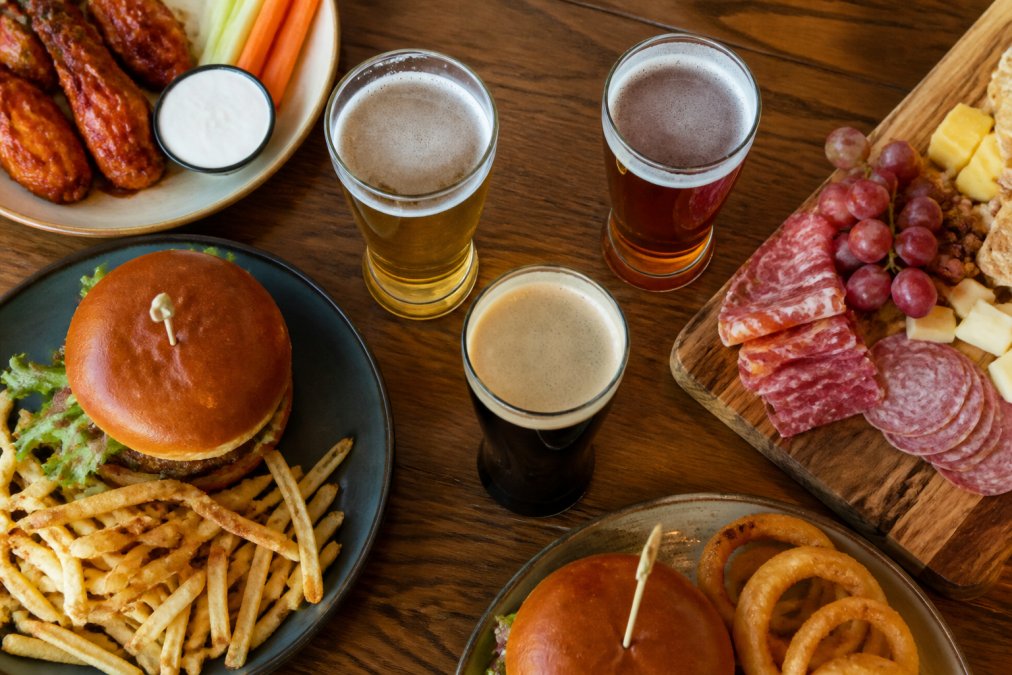
This chart covers the most common bar foods and which beer styles work best.
| Food | Best Beer Style | Why It Works |
|---|---|---|
| Burgers | Amber Ale, Brown Ale | Malt sweetness complements charred meat |
| Fried Chicken | Cream Ale, Blonde Ale | Light body, carbonation cuts richness |
| Spicy Wings | Amber Ale, IPA | Sweetness soothes heat, hops add contrast |
| Cheese & Charcuterie | Pale Ale, Stout | Bitterness cuts fat, roasty notes echo cured meat |
| Fish & Chips | Pilsner, Blonde Ale | Crisp carbonation, light body, minimal interference |
| Nachos | IPA, Amber Ale | Hops cut through cheese, sweetness balances heat |
Pairing Beer with Burgers and Sliders
Burgers are forgiving. The combination of charred beef, savory toppings, and bread creates a flavor profile that works with many beer styles. The key is matching intensity. A simple slider with basic toppings pairs well with a light blonde ale. A loaded burger with multiple toppings and bold condiments needs something with more presence, an amber ale or brown ale.
Pairing Beer with Fried Foods
Fried foods are rich and heavy. They coat your mouth with fat, and they fatigue your palate quickly. Your beer needs to cut through this and refresh your mouth between bites. Carbonation is essential, it's your palate cleanser. Body should be light to moderate, never heavy. A stout might seem appealing with fried chicken, but the weight compounds the richness.
Pairing Beer with Cheese and Charcuterie
Cheese and cured meats are complex. They have umami depth, salt, fat, and often subtle spice. They demand a beer with character. Pale ales work because the hop bitterness cuts through fat while the moderate body stands up to the intensity. Stouts work because the roasty, slightly bitter character echoes the deep flavors in aged cheese and cured meat.
Pairing Tequila and Craft Beer with Tacos
Tacos are the ultimate flexible food. They can be mild or intensely spicy, rich or light, simple or complex. This flexibility makes them perfect for exploring beer pairing, and it's why tacos deserve their own section.
Non-Alcoholic Craft Beer Pairings and Budget-Friendly Options
Non-alcoholic craft beers have improved dramatically. Modern NA beers from quality breweries have real flavor, malt sweetness, hop character, carbonation, without the alcohol. They pair with bar food just as effectively as their alcoholic counterparts.
Common Pairing Mistakes to Avoid
The biggest mistake is overthinking it. Pairing isn't a test. There's no "wrong" answer if you enjoy the combination. That said, some pairings create unnecessary friction.
Frequently Asked Questions
What are the basic rules for pairing craft beer with bar food?
Start with two principles: match intensity levels so neither the beer nor food overpowers the other, and choose either complementary flavors (similar profiles that enhance each other) or contrasting flavors (opposite qualities that balance each other). Consider the food's dominant characteristics, spice level, richness, saltiness, acidity, and select a beer whose carbonation, bitterness, sweetness, and mouthfeel work with those elements. Palate cleansing is key: effervescence and hop intensity cut through fatty or heavy foods, while malt sweetness complements spicy dishes.
Which craft beer goes best with spicy Mexican food?
Lighter lagers, wheat beers, and lower-IBU pale ales pair excellently with spicy Mexican fare. The carbonation and crisp finish help cleanse the palate between bites, reducing palate fatigue from heat. Avoid high-IBU IPAs with extremely spicy dishes, as the bitterness can intensify the burn. A Mexican lager or blonde ale offers a flavor bridge between the heat and the beer's refreshing qualities, while a hefeweizen's subtle sweetness and banana-like aroma complement the complexity of chile-based dishes without competing for attention.
How does carbonation affect food pairing?
Carbonation (effervescence) is one of the most underrated pairing tools. High carbonation cuts through rich, fatty, or fried foods by cleansing the palate and resetting your taste receptors between bites. This is why highly carbonated beers work so well with burgers, fried bar appetizers, and cheese-heavy dishes. Lower carbonation beers create a smoother mouthfeel that pairs better with lighter foods or delicate flavors. The acidity from carbonation also brightens the sensory experience, making it easier to detect subtle tasting notes in both the beer and food.
What is the best beer to drink with tacos?
Mexican lagers, pilsners, and light blonde ales are classic choices because they refresh without overwhelming the taco's filling. For carne asada or al pastor tacos with roasty, charred flavors, a pale ale with moderate hop intensity works well. Fish tacos pair beautifully with wheat beers or crisp lagers. If your tacos are loaded with cheese and rich sauces, choose a beer with higher carbonation and a dry finish. The key is selecting a beer whose alcohol by volume (ABV) and flavor profile match the taco's intensity, avoid heavy, roasty stouts with delicate fish or vegetable tacos.