 blog
Best Tortillas for Folding Burritos Without Tearing
Quick Summary
Flour tortillas are the best choice for folding burritos because their gluten gives them the stretch to hold a full filling without cracking. Warm them on a dry griddle for 15 to 30 seconds per side, keep them covered until you fold, and avoid overfilling to prevent tears.
- Corn tortillas lack gluten, so they crack when folded around a full burrito.
- A burrito-sized tortilla is typically around 12 inches across.
- Warm each side on a dry griddle for 15 to 30 seconds.
- Leave about two inches of space on each side of the filling.
- Mist a brittle tortilla with water and heat it briefly to restore pliability.
Table of Contents
- Why Some Tortillas Tear When You Fold a Burrito
- Flour vs. Corn Tortillas for Burritos
- Burrito Tortilla Size Guide: Picking the Right Diameter
- How to Heat Tortillas for Burritos So They Stay Pliable
- How to Fold a Burrito Without It Breaking
- Low-Carb, Keto and Store-Bought Options Compared
- Planning Your Next Burrito Night at The Corner Kick Cantina
- Frequently Asked Questions
Why Some Tortillas Tear When You Fold a Burrito
A tortilla tears when the force of folding exceeds what its internal structure can absorb, which is the main reason folding burritos goes wrong. That structure is built from three things: the gluten network formed when flour hydrates and is worked, the fat that coats those strands, and the moisture left in the dough. When any one of these is off, the tortilla fails at the fold, and the failure usually follows a recognizable pattern.
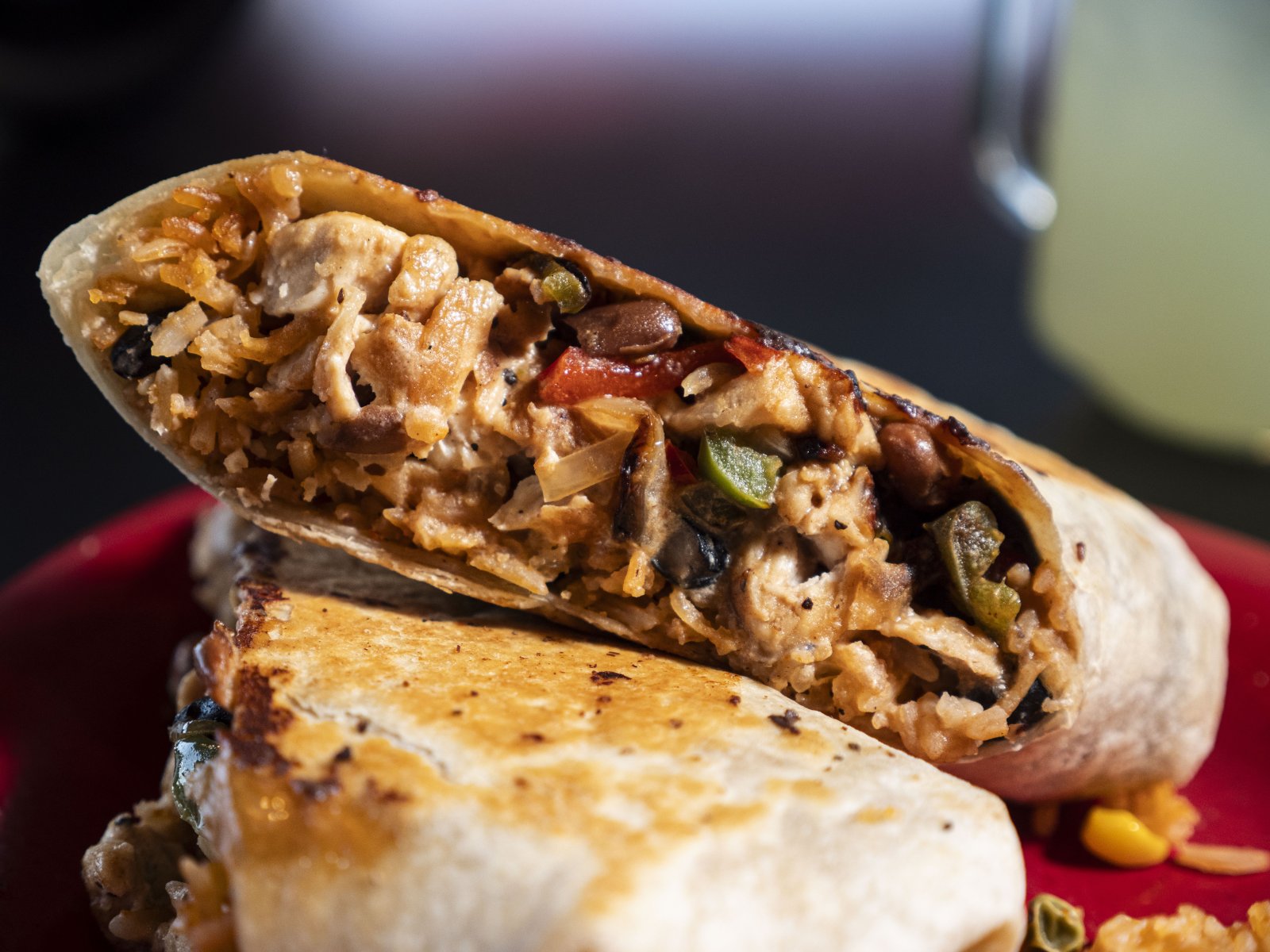
The first pattern is a dough that was under-rested. Gluten needs time to relax after kneading. A tortilla rolled straight from a tight dough ball resists the rolling pin, springs back, and ends up with uneven thickness. Thin spots become the first place a tear starts when the edge is pressed over a full filling.
The second pattern is overcooking. Heat drives moisture out of the dough, and once a tortilla loses enough water, the gluten network tightens and the sheet becomes brittle. A tortilla that is golden and blistered across its whole surface has usually lost the flexibility a burrito fold requires. Lighter spotting with a soft center generally folds better.
The third pattern is cooling. A tortilla that sits for even a few minutes begins to stiffen as its starches retrograde and its moisture migrates. This is why a tortilla that folded cleanly when it came off the griddle can split by the time the filling goes in.
Fixing a brittle tortilla often starts with the warming step, since a properly warmed sheet is the key to folding burritos without splits. If a tortilla cracks at the first fold even after warming, the sheet is likely dry rather than cold. A quick mist of water on each side and a few seconds back on the heat restores some pliability. A tortilla that has already split along a crease cannot be repaired, so it is better to discard it than to try to patch the fold.
Watch out: a tortilla that feels tacky or sticky to the touch when stacked will often tear around the edges when rolled, because excess surface moisture weakens the sheet just where the fold concentrates force.
For a burrito that holds together from first bite to last, the goal is a tortilla with an even thickness, a flexible center, and enough moisture to bend without tension at the seams.
Flour vs. Corn Tortillas for Burritos
Flour tortillas are the standard choice for burritos, and for good reason. They have the elasticity to hold a generous filling and fold tightly without cracking. Corn tortillas are made from masa, which contains no gluten, so they lack that stretch. Pressed corn tortillas tend to crack when folded around a full burrito, which is why they're usually reserved for tacos.
If you want a corn-based wrap, look for thinner, softer varieties and expect less forgiveness at the fold.
Burrito Tortilla Size Guide: Picking the Right Diameter
Diameter determines how much filling fits and how much tension sits on the fold. A burrito-sized tortilla is typically around 12 inches across, which gives enough room to build a full wrap without stretching the edges. Smaller tortillas force you to overfill, and the seams split.
Match the tortilla to the filling. Heavy fillings like rice, beans and meat need a larger, sturdier round. Lighter fillings can work on a smaller one.
How to Heat Tortillas for Burritos So They Stay Pliable
Heating does two things to a tortilla at once. It relaxes the gluten network so the sheet bends instead of snapping, and it redistributes moisture so the surface does not dry out at the fold. The method you choose determines how much of each you get, and the trade-offs matter most when the burrito will be eaten later.
A dry griddle over medium heat is the most controllable option. Each side needs only 15 to 30 seconds, and the goal is a tortilla that is warm through with light speckling, not a crisp one. Heavy browning removes the flexibility a fold needs. Stacking the warmed tortillas in a towel keeps the steam trapped and holds the temperature while you work.
Steaming in a towel in the microwave is faster and more forgiving, but it can make the surface gummy if the stack sits too long. Thirty to 45 seconds is usually enough for a small stack. Tortillas that come out damp on the outside often fold well for a minute or two, then tear as the surface dries unevenly.
Wrapping tortillas in foil and warming them in an oven at 350°F for about 10 minutes works well for a batch, and it keeps the sheets uniformly soft. The drawback is time and the tendency for the edges to dry if the foil is not sealed tightly.
Freezing changes the picture. A tortilla frozen flat and then thawed loses some of its moisture-holding capacity, so it tends to crack sooner after reheating than a fresh one. Thawing in the refrigerator before warming gives better results than thawing on the counter, because the slower change keeps the surface from becoming wet. A frozen burrito that is reheated in a microwave often turns the tortilla chewy at the seam, so wrapping the burrito in a damp paper towel and heating in short intervals reduces that toughness.
If you plan to meal prep burritos, warm each tortilla just before folding rather than the finished burrito, because the wrapped filling retains heat and steam that can soften the tortilla unevenly.
Watch out: tortillas that are warmed and then left uncovered cool and stiffen within a few minutes, so keep the stack covered until the moment of folding.
How to Fold a Burrito Without It Breaking
Start with a tortilla that is warm and pliable, then place the filling in a rectangle across the center, leaving about two inches of space on each side. Fold the two sides inward first, then roll the near edge over the filling, tucking it tight. Keep the roll firm but not so tight that the tortilla stretches.
Watch out: overfilling is the most common cause of tears. If the tortilla struggles to close, remove some filling rather than forcing the fold.
Low-Carb, Keto and Store-Bought Options Compared
Store-bought flour tortillas are convenient and fold reliably when fresh, but many contain preservatives to extend shelf life. Refrigerated options usually stay softer than shelf-stable packs. Check the label for fat content and the ingredient list, since shorter lists generally mean fewer additives.
Low-carb and keto tortillas typically rely on fiber, protein or alternative flours in place of wheat. They often crack more easily than traditional flour versions, so warm them thoroughly and fold gently.
| Tortilla type | Folding strength | Best for | Watch out for |
|---|---|---|---|
| Fresh flour (refrigerated) | High | Large burritos | Shorter shelf life |
| Shelf-stable flour | Medium to high | Everyday use | Preservatives |
| Corn | Low | Tacos, soft wraps | Cracks when folded |
| Low-carb or keto | Low to medium | Carb-conscious eating | Needs thorough warming |
Planning Your Next Burrito Night at The Corner Kick Cantina
Making burritos at home is rewarding, but sometimes you want someone else handling the tortillas and the fold. The Mid-West Mex menu at The Corner Kick Cantina features scratch-made burritos, so the wrap is ready when it reaches your table.
If you're hosting a larger gathering, our team can help you plan the details. Compare taco catering options to find what fits your event, or learn how to build custom burritos at home before you start cooking. Pricing depends on group size, date and service style, so contact the team for a current quote.
Whether you cook at home or come to us, the goal is the same: a tortilla that holds together from the first bite to the last. Book your next burrito night with us and let the Corner Kick team take care of the folding.
Frequently Asked Questions
What kind of tortillas are best for burritos?
Large flour tortillas are the most common choice for burritos because gluten gives them stretch and tear resistance when rolled around a full filling. Look for soft, pliable tortillas labeled burrito-sized, roughly 10 to 12 inches in diameter. Corn tortillas are more authentic in many Mexican kitchens but crack more easily at large sizes, so they work better for tacos than for wrapping a heavy burrito.
What size tortilla is best for a standard burrito?
A standard burrito usually calls for a 10- to 12-inch flour tortilla. Smaller 8-inch tortillas leave too little room to fold the sides in, while very large 14-inch wraps can be harder to seal without overlapping excessively. Measure the tortilla diameter on the package before buying, and match it to the amount of filling you plan to use.
How do you keep tortillas from cracking when folding burritos?
Warm the tortilla until it is soft and flexible, usually 15 to 30 seconds per side on a dry griddle or about 30 seconds in a microwave wrapped in a damp towel. Keep the filling centered and avoid overstuffing, then fold the sides in before rolling tightly from the bottom. Cold, stiff tortillas are the most common cause of tears.
Are flour or corn tortillas better for folding burritos?
Flour tortillas are generally better for folding burritos because the gluten network lets them bend and stretch without splitting. Corn tortillas have less elasticity and tend to crack along the fold line, especially at burrito size. If you prefer corn flavor, a double layer of smaller corn tortillas or a flour tortilla with a corn-based filling can help.