 how-to
Vegetarian Burrito Recipes for Beginners
Table of Contents
- Why Make Vegetarian Burritos at Home
- Veggie Burrito Ingredients You'll Need
- High-Protein Vegetarian Burrito Fillings
- Vegetarian Burrito Sauce and Seasonings
- Step-by-Step Assembly and Wrapping
- Vegetarian Freezer Burritos for Meal Prep
- Troubleshooting Soggy and Falling-Apart Burritos
- Conclusion
- Frequently Asked Questions
Last Updated: October 16, 2026
Why Make Vegetarian Burritos at Home
Making vegetarian burrito recipes at home gives you complete control over what goes inside, the ingredients, the seasoning, the freshness.
Store-bought burritos sit under heat lamps until the filling goes soggy and the flavors turn to mush. Homemade burritos stay crisp outside and vibrant inside because everything is assembled fresh.
At The Corner Kick Cantina, we build every burrito from scratch using locally made tortillas and quality ingredients. That same approach works in your kitchen, no special skills or expensive equipment, just good ingredients, solid technique, and a plan.
The beauty of vegetarian burrito recipes is flexibility. Beans, grains, roasted vegetables, and bold seasonings satisfy completely, freeze beautifully for meal prep, and suit beginners because there's no tricky protein to cook perfectly.
Veggie Burrito Ingredients You'll Need
Building a vegetarian burrito starts with understanding your ingredient categories. The key is balance: protein, carbs, vegetables, and seasoning working together.
Beans and Plant-Based Protein
Beans are the foundation of any vegetarian burrito. They provide protein, fiber, and heartiness that makes the meal satisfying.
Black beans are the classic choice, with a mild, earthy flavor that pairs with almost any seasoning. Pinto beans are creamier and earthier. Refried beans add richness but can make burritos soggy if you overdo it.
For texture variation, try lentils, they hold their shape better than beans and add a nutty flavor. Mixing beans and lentils adds complexity.
Walnut meat is another option: finely chopped walnuts seasoned with cumin and chili powder mimic ground meat's texture and feel substantial.
The amount matters. Use roughly one-third to one-half cup of beans or protein per burrito. Too little and the burrito feels empty. Too much and it becomes hard to wrap without tearing.
Rice, Quinoa, and Grains
Grains add bulk and bind everything together. Rice is traditional and reliable, cook it plain, then season separately so you control the flavor intensity.
Cilantro-lime rice is popular. Cook rice normally, then toss with fresh cilantro, lime juice, and a pinch of salt. The brightness cuts through heavier ingredients.
Seasoned rice works too: toast it in oil before adding water, then cook with cumin, garlic powder, and a bay leaf so the rice absorbs those flavors throughout.
Quinoa is higher in protein than rice with a slightly nutty taste. Mix it half and half with rice for better texture, plain quinoa alone can feel grainy.
Use about one-third to one-half cup of cooked grain per burrito. This gives structure without overwhelming the other ingredients.
Fresh Vegetables and Preparation
Fresh vegetables add crunch, color, and nutrition. The key is cutting them properly so they don't make the burrito soggy or hard to wrap.
Bell peppers should be diced small, about quarter-inch pieces. Slice them thin lengthwise first, then chop across. Red and yellow peppers are sweeter than green.
Onions add bite and flavor. Use red onions for color and sweetness, diced small like the peppers. Raw works, but lightly cooking them softens the sharp flavor.
Zucchini and summer squash work well roasted: cube them, toss with olive oil and salt, and roast at 400°F for about 12 minutes until tender and caramelized.
Corn adds sweetness. Fresh corn kernels are best, but frozen corn (thawed) works fine too. A quarter cup per burrito is enough.
Tomatoes should be fresh and diced small. Remove the watery center seeds if the tomato is very juicy. Too much tomato liquid makes burritos fall apart.
Lettuce or spinach adds freshness. Shred lettuce finely so it doesn't create bulk. Spinach can be raw or lightly wilted.
High-Protein Vegetarian Burrito Fillings
The best vegetarian burrito fillings combine protein, texture, and flavor, layers that work together, not ingredients fighting each other.
A solid base is seasoned beans mixed with cooked grains, the beans provide protein and earthiness, the grains add bulk and hold everything together. Season this mixture generously; it's the foundation.
Add one cooked vegetable for texture, roasted zucchini, peppers, or mushrooms, soft enough to eat easily but firm enough to provide structure.
Include one fresh, raw element like shredded lettuce or cilantro for brightness and crunch.
Then add your sauce or spread. This brings everything together and adds moisture (but not too much).
The total weight should be around eight to ten ounces. That's substantial without being impossible to wrap. Too light and the burrito feels empty. Too heavy and it tears when you try to roll it.
Vegetarian Burrito Sauce and Seasonings
Sauces bring everything together with moisture, flavor, and richness, but too much makes burritos soggy and hard to wrap.
Salsa is the obvious choice: fresh pico de gallo adds brightness, cooked red salsa brings depth. Use two to three tablespoons per burrito, spread thinly on the tortilla before adding fillings.
Guacamole adds creaminess and healthy fats, mash avocado with lime juice, salt, and minced cilantro. One to two tablespoons per burrito is plenty; too much makes wrapping difficult.
Sour cream or Mexican crema adds tang and richness. Thin it slightly with lime juice so it spreads easily. One tablespoon per burrito is standard.
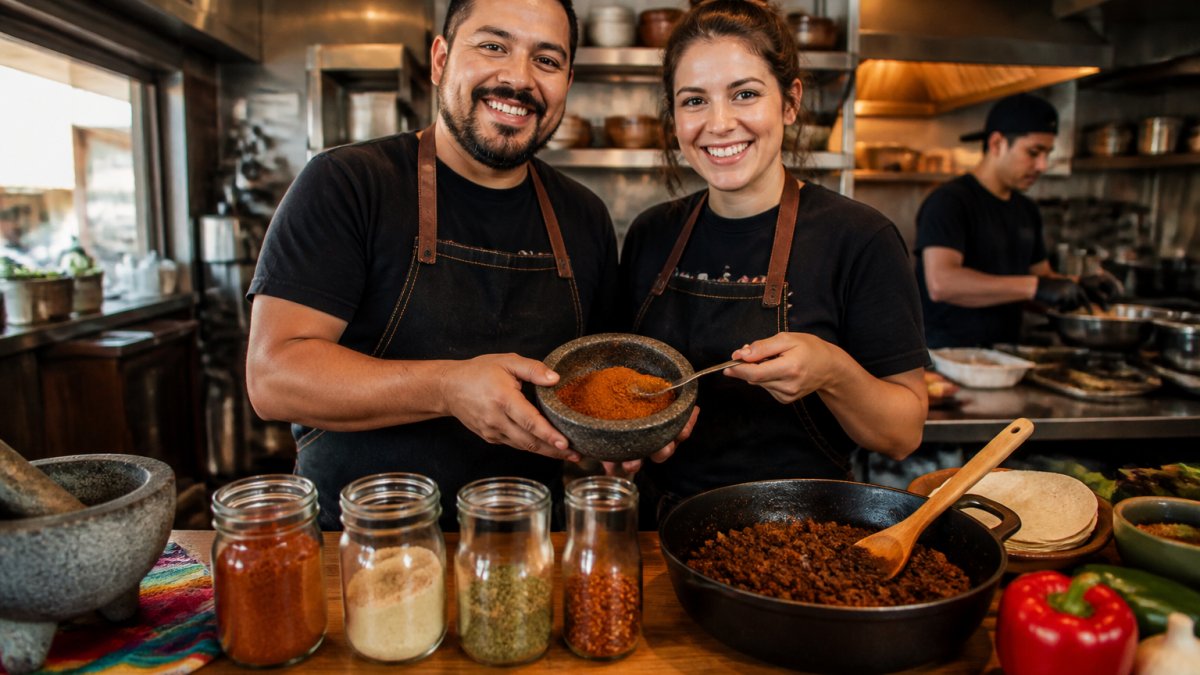
For seasoning the fillings, the basics are cumin, chili powder, garlic powder, and salt.
Ground coriander adds citrus notes, paprika brings color and mild sweetness, and a pinch of cayenne adds heat. Start with less and taste as you go.
Fresh cilantro is essential. Chop it finely and add it to the rice, beans, or as a finishing touch. Lime juice brightens everything, squeeze it over the filling just before wrapping.
Step-by-Step Assembly and Wrapping
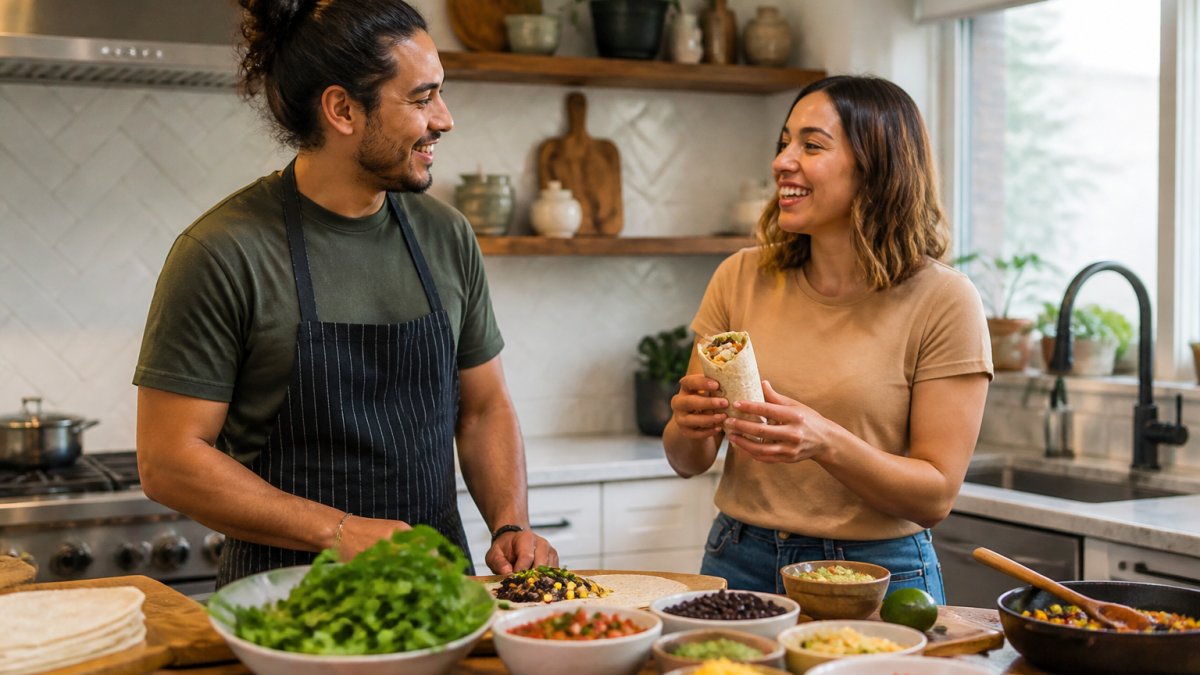
Wrapping a burrito properly keeps everything inside and makes it easy to eat. The technique matters more than the ingredients.
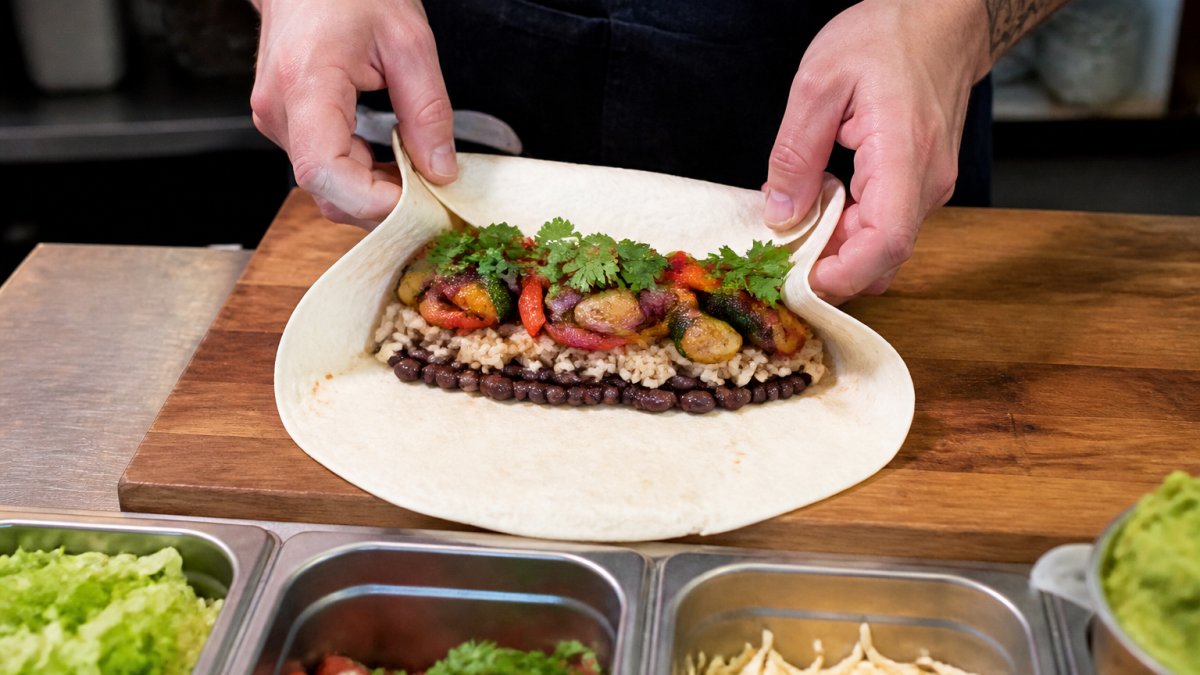
Start with the right tortilla. Flour tortillas are traditional, pliable, and forgiving; corn tortillas are more authentic but tear easily. For your first attempts, use flour.
Warm the tortilla first, directly over a gas flame for three to five seconds per side, or in a damp towel for a minute.
Lay the warm tortilla flat on a clean surface. Place your fillings in a horizontal line across the center, but leave two inches of space on the left and right edges.
Fold the bottom edge up and over the filling, tucking it underneath tightly. This creates the first seal. Then fold the left and right edges inward about two inches.
The final roll should be snug but not so tight that the tortilla tears. If filling pokes out the sides, you used too much.
How to Wrap Your Burrito Properly
The wrapping technique has three critical steps: the bottom fold, the side folds, and the final roll.
The bottom fold is where most beginners struggle. Fold the edge closest to you up and over the filling, then tuck it under firmly, this creates tension and keeps the filling from sliding as you roll. Press the fold down hard with your thumbs.
The side folds come next: fold the left edge inward at a 45-degree angle, press it down, and repeat on the right. These contain the filling and create clean edges.
The final roll is smooth and controlled: with both hands, roll away from you using steady pressure, firm enough for a tight seal, not so hard you tear the tortilla. The burrito should feel solid, not squishy.
Practice with smaller burritos first. They're easier to handle and forgiving if the wrap isn't perfect. Once you get the feel for the tension and the fold sequence, larger burritos become simple.
Common Wrapping Mistakes to Avoid
The most common mistake is overstuffing. Beginners think more filling means a better burrito. Actually, too much filling makes wrapping impossible. The tortilla tears. Filling leaks out. The whole thing falls apart.
Another mistake is using cold tortillas. They crack instead of folding. Always warm them first. Even five seconds over a flame makes a huge difference.
Wet ingredients are a common problem: watery salsa or dripping vegetables make the tortilla soggy, so it tears during wrapping and falls apart when you eat it. Pat vegetables dry, use salsa sparingly, and spread guacamole thinly.
Skipping the side folds leaves a burrito that opens at the ends and spills filling as you eat. Those folds aren't optional, they seal it completely.
Rolling too loosely leaves gaps and air pockets. The burrito unravels. Roll with steady, firm pressure. It should feel like a solid log, not a loose cylinder.
Vegetarian Freezer Burritos for Meal Prep
Freezing burritos is one of the best meal-prep strategies. You make a batch on Sunday. You have ready-to-eat meals all week.
Assemble the burritos as normal, then let them cool to room temperature, a hot burrito will steam and get soggy as it freezes.
Frozen burritos keep for about three months. After that, freezer burn starts to affect the texture.
To reheat, unwrap the parchment and wrap the burrito loosely in a damp paper towel.
Alternatively, reheat in a skillet over medium heat, seam-side down, two to three minutes per side until warm and slightly crispy. It tastes better than microwaving but takes longer.
The best fillings for freezing are beans, grains, and cooked vegetables. Fresh vegetables like lettuce and tomatoes get mushy when frozen, so add those after reheating.
Some people freeze the components separately and assemble after thawing for fresher taste: cook your beans, rice, and roasted vegetables, freeze them in separate containers, and assemble fresh burritos as needed.
Troubleshooting Soggy and Falling-Apart Burritos
Soggy burritos are the number-one complaint from beginners. The tortilla gets soft. The filling leaks out. The whole thing falls apart.
The cause is almost always excess moisture, wet vegetables, too much salsa, or juicy tomatoes create steam inside, and the tortilla absorbs it and weakens.
Another cause is not warming the tortilla enough, a cold tortilla is brittle and prone to tearing, while a properly warmed one is flexible and strong.
Some people struggle because they're not folding properly: loose folds create gaps, filling pushes through, and everything gets wet. Practice the fold sequence, bottom first, then sides, then roll, with each fold tight and deliberate.
If your burritos keep falling apart when you eat them, you're probably using too much filling. Reduce it by one-quarter, the burrito will hold together better and be easier to eat.
Timing also matters: eat the burrito within 15 to 20 minutes of wrapping if possible, since the longer it sits, the more moisture the tortilla absorbs. If you make them ahead, keep them wrapped tightly in foil.
Conclusion
Making vegetarian burritos at home is easier than you think. Warm tortillas, moderate filling, proper folding technique, and dry ingredients are your foundation. Start simple, beans, rice, roasted peppers, and salsa. Master that combination. Then experiment with new vegetables and seasonings.
At The Corner Kick Cantina, we build every burrito with fresh, locally sourced ingredients and the same careful technique, so every component is optimized for flavor and texture. Whether you're cooking at home or grabbing a meal before the big match, the principles are identical: quality ingredients, proper preparation, and respect for the craft. Book today to experience how these fundamentals come together in every plate we serve.
Frequently Asked Questions
Can you freeze vegetarian burritos for later?
Yes, vegetarian burritos can be frozen for later. This makes them ideal for meal prep and quick weeknight dinners.
What ingredients make a high-protein vegetarian burrito?
Build protein with beans (black, pinto, or refried), lentils, quinoa, or walnut-based meat alternatives. Combine at least two protein sources, for example, black beans plus quinoa, to build a high-protein burrito. Include roasted vegetables like bell peppers and zucchini for fiber and nutrients.
What sauce works best in a vegetarian burrito?
Salsa, guacamole, and sour cream are classic choices. For heat, use chipotle or jalapeño salsa. Cilantro-lime crema adds brightness. Mix salsa with cumin and ground coriander for a seasoned sauce. Spread sauce on the tortilla before adding filling to prevent sogginess. Keep sauce portions moderate, about 2-3 tablespoons per burrito, so the filling stays intact.
How do you keep a vegetarian burrito from getting soggy?
Layer ingredients strategically: place beans and rice in the center, surrounded by drier ingredients like cheese and roasted vegetables. Avoid watery ingredients like fresh tomatoes directly against the tortilla. Spread sauce sparingly and on the tortilla itself, not on wet fillings.