 blog
Omaha Bars with Private Event Spaces: 2026 Guide
Table of Contents
- What to Look for in Private Event Spaces at Omaha Bars
- How to Plan a Bar Event in Omaha: A Step-by-Step Checklist
- Sports Bar Event Hosting Tips: AV, Timing, and Group Flow
- Types of Events Omaha Bars with Private Event Spaces Host
- Food, Beverage Packages, and Custom Menus for Group Events
- Parking, Accessibility, and Getting Your Guests to the Door
- Conclusion: Booking Your Omaha Private Event Space
- Frequently Asked Questions
Last Updated: October 1, 2026
What to Look for in Private Event Spaces at Omaha Bars
Finding the right room starts with two numbers: how many guests you're seating, and how much freedom you want them to have. Private event spaces at Omaha bars generally fall into two categories, seated dining rooms and open cocktail floors, and the one you book changes everything about your night. Elevating the atmosphere beyond a standard bar setting often requires finding luxury spaces that provide the necessary infrastructure for more sophisticated gatherings.
Seated capacity is the number of guests who get a chair at a table. Cocktail-style capacity is the number of guests who can stand, mingle, and hold a drink comfortably.
Seated Capacity vs. Cocktail-Style Capacity
Seated events suit dinners, presentations, and anything with a program. Cocktail-style events suit watch parties, mixers, and receptions where people move around.
Rental Fees, Bar Minimums, and What Drives the Quote
Most bars price private events through a rental fee, a food and beverage minimum, or both. The minimum is the amount your group must spend on food and drinks; the rental fee is a separate charge for the room itself.
How to Plan a Bar Event in Omaha: A Step-by-Step Checklist
Planning a bar event is a sequence, not a scramble. Work through these steps in order and the logistics mostly handle themselves.
- Set your guest count range and your budget ceiling
- Decide seated or cocktail-style
- Shortlist venues and confirm capacity for your date
- Ask about rental fees, minimums, and what's included
- Book a walkthrough or virtual tour
- Lock the food and beverage package
- Confirm AV needs and timing
- Send invitations with parking details
- Reconfirm the final headcount 72 hours out
- Assign one point person for day-of questions
Questions to Ask on Your Booking Inquiry Call
Come to the call with a list. Ask about seated capacity, cocktail capacity, the food and beverage minimum, the rental fee, AV equipment, patio access, parking, and whether an event coordinator and on-site staff are included.
Sports Bar Event Hosting Tips: AV, Timing, and Group Flow
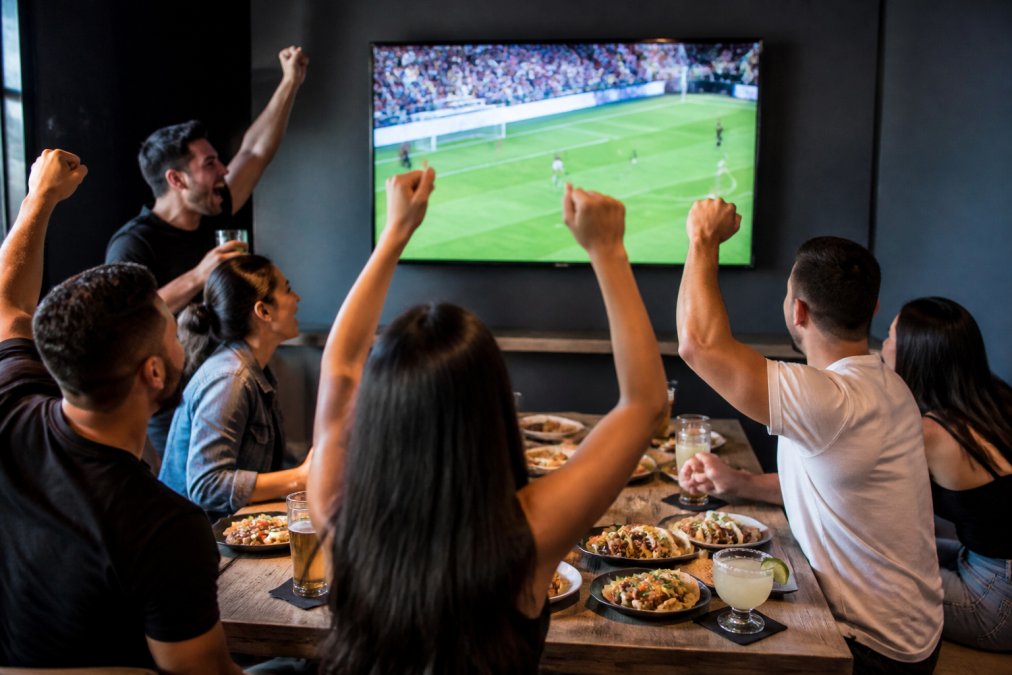
For a sports bar event, the screen is the main event. Confirm which games will be on, whether you get a dedicated TV or the whole room's audio, and who controls the volume.
Types of Events Omaha Bars with Private Event Spaces Host
Private event spaces host far more than birthday parties. Common bookings include corporate meetings, business presentations, anniversary parties, holiday gatherings, fantasy league drafts, watch parties, rehearsal dinners, and client appreciation nights.
Food, Beverage Packages, and Custom Menus for Group Events
Food and drink usually decide whether a group event feels generous or stingy, and the way a venue structures its packages matters more than the menu itself. Most bars build group pricing around one of three models, and knowing which one you're looking at tells you how to compare quotes.
How Beverage Tiers Actually Differ
Tiers are usually defined by spirit brands and by whether cocktails are included, not by how many drinks a guest gets.
- Beer and wine only, the most affordable hosted tier; good for casual watch parties and daytime events.
- Well spirits and house cocktails, adds a basic mixed-drink and margarita program.
- Call or premium spirits, named brands, often including a curated agave selection; this is where a tequila-focused venue can differentiate.
- Top-shelf / open bar, everything on the back bar, usually priced per person per hour at the highest rate.
Custom Menus: Give the Kitchen a Headcount and a Theme
Custom menus work best when you hand the kitchen constraints, not a dish list. A scratch kitchen can build shareable platters, taco bars, and passed appetizers that keep a cocktail-style reception moving, but it needs to know your guest count, your event style, and any dietary needs.
A few practical rules:
- Cocktail-style events want 4-6 bites per guest per hour if the event runs two hours or less, and fewer if a seated course follows.
- Seated dinners want a plated or buffet menu with a set number of entree choices, usually two or three, plus a vegetarian option.
- Watch parties want food that survives a screen: handheld items, shareable platters, and anything that doesn't require a fork.
- Dietary needs should be flagged at booking, not the week of. Ask how the kitchen handles gluten-free, vegetarian, and allergy requests, and whether those are substitutions or separate plates.
| Package Type | Best For | What to Confirm |
|---|---|---|
| Consumption bar | Small, predictable groups | Whether a soft cap converts to cash bar |
| Hosted beer and wine | Casual watch parties | Hours included, per-person rate, tier definition |
| Hosted call/premium bar | Celebrations, receptions | Whether named brands and cocktails are included |
| Food and beverage minimum | Private room bookings | Whether tax, gratuity, and rental fee count toward it |
| Food platters | Cocktail-style events | Portions per guest and per-hour pacing |
| Seated dinner menu | Group dinners, banquets | Entree choices, dietary options, service style |
Parking, Accessibility, and Getting Your Guests to the Door
The best event can still fall flat if guests can't find the door. This is the section most venue guides skip, and it's the one event planners actually need, because arrival logistics are the first thing guests experience and the last thing anyone wants to troubleshoot by text.
Parking: Map It Before You Send Invitations
Ask the venue for three things in writing: on-site parking capacity, nearby lot or garage options, and the designated rideshare drop-off point. A venue with a small lot may still work well if there's a garage a block away, but your guests need to know that before they drive.
A few questions worth asking:
- Is parking free, validated, or paid, and does the venue validate?
- Is there a lot attendant or is it self-park?
- What's the overflow plan if the lot fills, is there a secondary lot?
- Where exactly should rideshare drivers drop off, and is there a covered or lit entry?
Accessibility: What to Confirm, Not Assume
Accessibility is not a yes-or-no question. Confirm each of these separately, because a venue can have step-free entry and still have an inaccessible restroom or a private room up a flight of stairs.
- Entry, step-free path from the parking area or sidewalk to the door, with no threshold higher than a standard wheelchair can clear.
- Restrooms, at least one accessible stall with grab bars and clear floor space, on the same level as your event space.
- Seating, space for a wheelchair at a table, not just at the end of a row.
- Service animals, welcome, and the venue should say so.
- Path of travel, a clear route from entry to the private room, including any elevators or ramps.
The Logistics Note That Prevents Event-Day Texts
Send your guests a short logistics note a few days before the event. Keep it to five lines:
- Address and the name of the private room
- Parking option and whether it's validated
- Rideshare drop-off point
- Entry point, which door to use, especially if the venue has multiple
- Start time and whether food is served on arrival
Conclusion: Booking Your Omaha Private Event Space
The hardest part of planning a group event is comparing venues that all sound the same on paper. Get the capacities, the minimums, and the AV details in writing, then match the room to the event you're actually hosting.
Frequently Asked Questions
Which bars in Omaha offer party rooms?
Many Omaha bars set aside a party room or semi-private area, though the setup varies widely. Some offer a fully enclosed room with its own entrance and restrooms, while others rope off a section of the main floor. Ask whether the space has a door, its own audio-visual equipment, and a dedicated server. A true party room should let your group talk, eat, and watch a game without competing with the main bar crowd.
Do local bars charge a rental fee for private event rooms?
Some do, some don't. Common models include a flat rental fee, a food and beverage minimum that replaces the fee, or a per-person package. The right structure depends on your guest count and timing. A slow Tuesday may come with a lower minimum than a Saturday during football season. Always ask for the full breakdown in writing before you sign, including tax and service charges.
How far in advance should I book a private event space?
For a casual gathering of 20 to 30 people, two to four weeks is usually enough. For 40 or more guests, or for dates near major sports weekends and holidays, start three to six months out. December fills fastest. If your date is flexible, ask about off-peak nights, which often come with more room options and easier terms. A quick booking inquiry call will tell you what's open.
What should I look for when booking a private event space in a bar?
Start with capacity: ask for both seated and cocktail-style numbers, since they can differ by 30 percent or more. Then confirm the audio-visual setup, outdoor patio access, parking, and whether staff are dedicated to your group. Get the food and beverage minimum, cancellation policy, and deposit terms in writing. A short walkthrough or virtual tour before you commit catches layout problems early.