 how-to
Host a Budget Taco Bar: Complete Planning Guide
Table of Contents
- Set Your Budget and Guest Count
- How Much Taco Meat Per Person: Calculating Portions
- Build Your Taco Bar Shopping List
- Cheap Taco Bar Side Dishes That Impress
- Preparation and Make-Ahead Strategies
- Reduce Waste and Manage Leftovers
- Taco Bar Setup and Layout for Maximum Efficiency
- Frequently Asked Questions
Last Updated: September 29, 2026
Host a Budget Taco Bar: Complete Planning Guide
Hosting a taco bar doesn't require a big budget. With smart planning, you can feed a crowd affordably while keeping the food fresh and delicious. This guide covers everything you need to know about setting up a budget taco bar that impresses your guests without breaking the bank. Scaling these principles of efficient preparation and crowd-pleasing variety provides a solid foundation when hosting a BBQ party for your next outdoor gathering.
Whether you're hosting 10 people or 50, the same principles apply: smart shopping, smart portions, and smart prep work.
Set Your Budget and Guest Count
Start by knowing two numbers: how many people you're feeding and how much you want to spend total.
Plan for 2-3 tacos per person at casual gatherings, 3-4 for longer events (4+ hours), and 1 taco per person for quick lunches or appetizers.
Divide your total budget by guest count to find your cost per person. For a budget taco bar, aim for $3-5 per person to cover meat, tortillas, toppings, and sides.
Example math:
- 20 guests × 3 tacos each = 60 tacos
- Budget of $75 total = $3.75 per person
- This is tight but doable with smart shopping
How Much Taco Meat Per Person: Calculating Portions
Plan for 3-4 ounces of cooked meat per person (4 ounces for hearty eaters, 3 for lighter events).
Raw meat loses about 25% weight when cooked, so multiply your cooked meat target by 1.33 to find raw meat to buy.
Quick calculation:
- 20 guests × 3 ounces cooked = 60 ounces cooked meat needed
- 60 ÷ 0.75 = 80 ounces raw meat to buy
- That's 5 pounds of ground beef
Mixing proteins stretches your budget; chicken is often cheaper than beef.
Season meat the night before and brown it the morning of the event, then reheat gently before guests arrive.
Build Your Taco Bar Shopping List
A good shopping list prevents impulse buys and keeps you organized. Here's what you need for a budget taco bar.
Budget-Friendly Protein Options
Ground beef is the cheapest protein; buy 80/20 blend in bulk for flavor and moisture.
Rotisserie chickens are fast and affordable; shred them yourself in 10 minutes to save money versus pre-shredded.
Ground turkey is leaner and slightly cheaper; season well as it's blander than beef.
Essential Taco Toppings and Condiments
Must-have toppings:
- Shredded cheese (cheddar or Mexican blend)
- Shredded lettuce
- Diced tomatoes
- Sour cream
- Salsa (mild and hot)
Nice-to-have toppings (if budget allows):
- Cilantro
- Diced onion
- Jalapeños
- Lime wedges
- Hot sauce
Buy shredded cheese and bulk salsa jars. Dice tomatoes and lettuce the morning of the event.
Buy the largest sour cream container available; guests use it generously.
Tortilla and Shell Selection
Soft flour tortillas are cheaper and feed more people per package; they freeze well for future events.
Hard shells cost more and break easily; buy only a few if including them.
Heat soft tortillas in a damp towel in the microwave just before serving to keep them warm and pliable.
Tortilla math:
- 1 package (20 tortillas) feeds 6-8 people
- 20 guests = buy 3 packages minimum
- Buy 4 if you want leftovers
Cheap Taco Bar Side Dishes That Impress
Cilantro lime rice: Cook the day before, mix in lime juice and cilantro just before serving.
Black beans: Heat canned beans with cumin and garlic for affordable protein.
Corn salad: Mix canned corn with diced red onion, cilantro, and lime juice the morning of the event.
Chips and salsa: Buy plain tortilla chips in bulk for guests to snack on while waiting.
Budget-Friendly Beverage Pairings
Drinks matter as much as food at a taco bar. The good news: budget-friendly options pair beautifully with tacos and don't require a full bar.
Beer is the easiest pairing. Light lagers and Mexican pilsners complement tacos well. Plan for 1.5 beers per guest over a 3-hour event.
Margaritas on a budget: Use mixto tequila (at least 51% blue agave) mixed with fresh lime juice, simple syrup, and triple sec. Batch in a pitcher the morning of the event.
Agua fresca: Blend watermelon, cucumber, or hibiscus with water, lime juice, and sugar. Serve chilled; it's affordable and naturally non-alcoholic.
Lime and sparkling water is a refreshing non-alcoholic option.
Preparation and Make-Ahead Strategies
The secret to a smooth taco bar is prep work done ahead of time. This saves stress on event day and keeps costs down.
Three days before:
- Plan your menu and finalize your shopping list
- Buy all non-perishables (rice, beans, tortillas, chips)
Two days before:
- Buy meat and perishables
- Cook rice and beans
- Store in airtight containers in the fridge
One day before:
- Season and brown your meat
- Store in a container in the fridge
- Prepare any toppings that won't wilt (shredded cheese, sour cream)
Morning of the event:
- Dice tomatoes and lettuce
- Slice onions and jalapeños
- Arrange toppings in bowls
- Set up your taco bar layout
- Reheat meat gently 30 minutes before guests arrive
One hour before guests arrive:
- Heat tortillas and keep them wrapped in a damp towel
- Put out chips and salsa
- Do a final check of all toppings
Reduce Waste and Manage Leftovers
A budget taco bar succeeds when you buy strategically to minimize waste from the start. Most guides focus on what to buy, not how to buy in quantities that match your actual guest behavior and event length.
Calculate Purchases to Prevent Over-Buying
The biggest waste happens when you buy "just in case" without a system. Start by being honest about your guest list: Will everyone show up? Will they eat the full 3 tacos you planned, or will some pick at sides instead?
Adjust your meat purchase based on event type:
- Casual afternoon gathering (2-3 hours): Buy for 2.5 tacos per person. Guests graze and socialize; they don't eat continuously.
- Evening dinner event (4+ hours): Buy for 3.5 tacos per person. Longer events mean more eating.
- Appetizer-style event (1-2 hours): Buy for 1.5 tacos per person. Keep portions light.
Adjust your topping quantities based on guest preferences:
- If your crowd skews vegetarian or health-conscious, buy less meat and more beans, rice, and vegetables.
- If you're serving families with young children, they'll eat fewer toppings; buy smaller quantities of lettuce and tomatoes.
- If your guests are known meat-eaters, increase protein slightly and reduce sides.
Strategic Leftover Repurposing
Leftovers aren't waste, they're future meals. Plan for them intentionally.
Cooked meat (keeps 3-4 days refrigerated, up to 3 months frozen):
- Shred and use in breakfast burritos or quesadillas within 2 days.
- Freeze in 1-pound portions in freezer bags, labeled with the date. Thaw and reheat for nachos, taco salads, or burrito bowls.
- Mix with cream cheese and salsa for a quick dip.
Beans and rice (keep 3-4 days refrigerated, up to 3 months frozen):
- Freeze in 2-cup portions. These reheat beautifully and form the base for quick weeknight dinners.
- Layer with leftover meat and cheese for burrito bowls.
- Mix into soups or use as a side for grilled chicken.
Tortillas (keep 1 week refrigerated, up to 3 months frozen):
- Wrap tightly in plastic wrap and freeze immediately after the event. Label with the date.
- Thaw at room temperature and reheat in a dry skillet or microwave. They taste nearly fresh.
- Use for quesadillas, wraps, or breakfast burritos.
Lettuce and tomatoes (use within 1-2 days):
- Don't plan to freeze these. Buy only what you'll use during the event plus one extra day.
- If you have excess, use in salads the next day or chop and add to soups.
- Compost wilted vegetables rather than storing them.
Cheese and sour cream (keep 1-2 weeks refrigerated):
- Buy in quantities you'll use within a week of the event. These don't freeze well.
- Sour cream works in baked potatoes, tacos, or as a base for dips.
- Shredded cheese melts into quesadillas or nachos.
The Math: How Waste Reduction Saves Money
If you host a taco bar every other month, strategic freezing of leftovers means you buy less fresh protein for your next event. Over a year, this compounds.
Taco Bar Setup and Layout for Maximum Efficiency
How you arrange your taco bar affects how smoothly the event runs. A good layout prevents bottlenecks and makes serving easier.
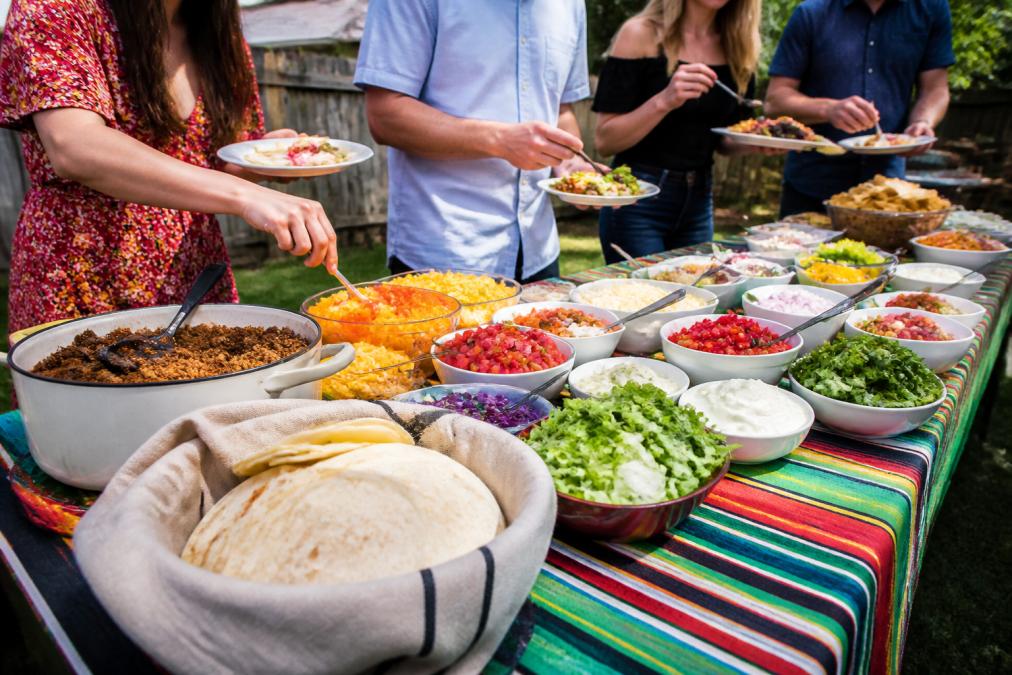
Left to right layout:
- Stacked warm tortillas
- Seasoned meat in a serving dish with a spoon
- Rice and beans in separate bowls
- Toppings: cheese, lettuce, tomato, onion, jalapeños
- Sauces: salsa, sour cream, hot sauce
- Lime wedges at the end
Frequently Asked Questions
How much taco meat do I need for 20 people?
Plan for 0.25 to 0.33 pounds of cooked meat per person. For 20 guests, that's 5 to 6.6 pounds of cooked meat. Start with 7 to 8 pounds of raw ground beef or shredded chicken, since meat shrinks during cooking. If serving multiple protein options, divide the total amount between them. Offering two proteins lets you reduce the quantity of each while giving guests variety.
What are the most budget-friendly taco bar proteins?
Ground beef is the most affordable and versatile option. Buy it in bulk when it's on sale and freeze it. Shredded chicken (rotisserie or poached breasts) costs slightly more but stretches further because it's leaner. Black beans and refried beans are excellent budget fillers that add substance without breaking the bank. Combining one meat with beans reduces your per-person protein cost significantly while keeping the taco bar satisfying.
What should I include on a budget taco bar shopping list?
Start with ground beef or chicken, tortillas (soft and hard), shredded cheese, lettuce, tomatoes, onions, cilantro, sour cream, and salsa. Add black beans, cilantro lime rice, and pico de gallo. Skip expensive items like shrimp or steak. Buy store brands instead of name brands. Purchase toppings in bulk from warehouse clubs if possible. Skip specialty items and focus on the taco bar essentials that guests expect: protein, shells, cheese, and fresh toppings.
How can I keep my taco bar costs down without compromising quality?
Buy proteins in bulk and freeze ahead. Shop sales and stock up on non-perishables. Use seasonal produce for fresh toppings. Make cilantro lime rice and beans from scratch instead of buying pre-made versions. Offer one premium protein and one budget-friendly option. Skip appetizers and focus your budget on the main event. Buy store-brand tortillas and condiments. Batch-prep toppings the day before to reduce waste and labor costs.