 listicle
Gluten-Free Options at Sports Bars: A Safe Dining Guide
Table of Contents
- Why Gluten-Free Dining at Sports Bars Requires Extra Care
- Understanding Cross-Contamination in Restaurant Kitchens
- How to Ask About Gluten-Free Ingredients When Ordering
- Mid-West Mex Gluten-Free Options: A Regional Advantage
- Safe Bar Food Choices: What You Can Actually Eat
- Questions to Ask Your Server Before You Order
- Spotting Red Flags and Building Your Safety Checklist
- Conclusion
- Frequently Asked Questions
Last Updated: September 28, 2026
Why Gluten-Free Dining at Sports Bars Requires Extra Care
Finding truly safe gluten free sports bars when you have celiac disease or a gluten sensitivity is harder than locating other restaurants that accommodate dietary needs. The kitchens are busy, the menus are broad, and cross-contamination happens easily in high-volume environments where multiple dishes share fryers, cutting boards, and prep surfaces.
At The Corner Kick Cantina, we understand that gluten-free options at local sports bars aren't just about picking the right item off the menu. They're about knowing how to verify that your food was prepared safely, asking the right questions, and understanding the real risks in a working kitchen during a busy game day.
This guide walks you through how to identify safe dining choices, communicate your needs clearly, and spot the red flags that signal a restaurant isn't equipped to handle your dietary requirements. Whether you're watching the match or grabbing a quick meal, you deserve to eat without worry.
Understanding Cross-Contamination in Restaurant Kitchens
Cross-contamination is the biggest threat to anyone avoiding gluten. It happens when gluten particles transfer from one food, surface, or tool to another, often invisibly. For someone with celiac disease, even trace amounts (as little as 20 parts per million, according to FDA standards) can trigger an immune response and intestinal damage.
In a typical sports bar kitchen, one cook might handle a burger with a wheat bun, then touch the fryer basket that will cook your fries. Another cook preps salads on a cutting board that previously held bread. Shared utensils, shared prep areas, and shared equipment mean that even "naturally gluten-free" foods can become unsafe in seconds. During peak game hours, when a kitchen is operating at maximum volume, the risk multiplies because speed and multitasking override careful separation.
The risk is real. Many restaurants claim they can accommodate gluten-free diets, but they don't have the training, protocols, or kitchen layout to actually prevent cross-contact. High-volume bars especially struggle because speed matters more than precision during peak hours.
How to Verify Kitchen Safety: Beyond the Menu
Most guides tell you what cross-contamination is. What they miss is how to verify that a specific kitchen actually prevents it. Here's what to look for:
Dedicated Fryers: A dedicated fryer used only for gluten-free items is the gold standard. Ask directly: "Do you have a separate fryer that is never used for breaded or flour-based items?" If the answer is no, fried foods are unsafe. A shared fryer with a basket swap is not sufficient, oil absorbs gluten particles and cross-contaminates everything cooked in it.
Separate Prep Surfaces: Ideally, gluten-free items are prepared on a cutting board, counter, or prep station that is never used for bread, pasta, or flour-based items. Ask: "Will this be prepared on a dedicated surface, or will it share a prep area with breaded items?" If they say "we'll clean the surface first," that's not adequate. Gluten particles stick to surfaces and utensils; washing alone doesn't guarantee removal.
Clean Utensils and Hands: Every utensil used to prepare your food should be clean and never have touched gluten-containing items. This includes tongs, spatulas, cutting boards, and knives. Ask: "Will the cook use clean utensils and wash their hands before preparing my food?" This should be automatic, but in a busy kitchen, it's worth confirming.
Ingredient Sourcing: Some cross-contamination happens before food reaches the kitchen. Ask whether proteins, vegetables, and sauces are sourced from suppliers that handle gluten-free items separately. Pre-made sauces, seasoning blends, and marinades are common hidden sources of gluten.
The Reality Check: If a restaurant can't clearly answer these questions, or if the kitchen layout makes separation impossible, cross-contamination is almost inevitable. A manager or chef who understands celiac disease will be able to walk you through their specific protocols. If they seem uncertain or defensive, that's a signal to order something simple (like a grilled protein with plain sides) or choose a different venue.
How to Ask About Gluten-Free Ingredients When Ordering
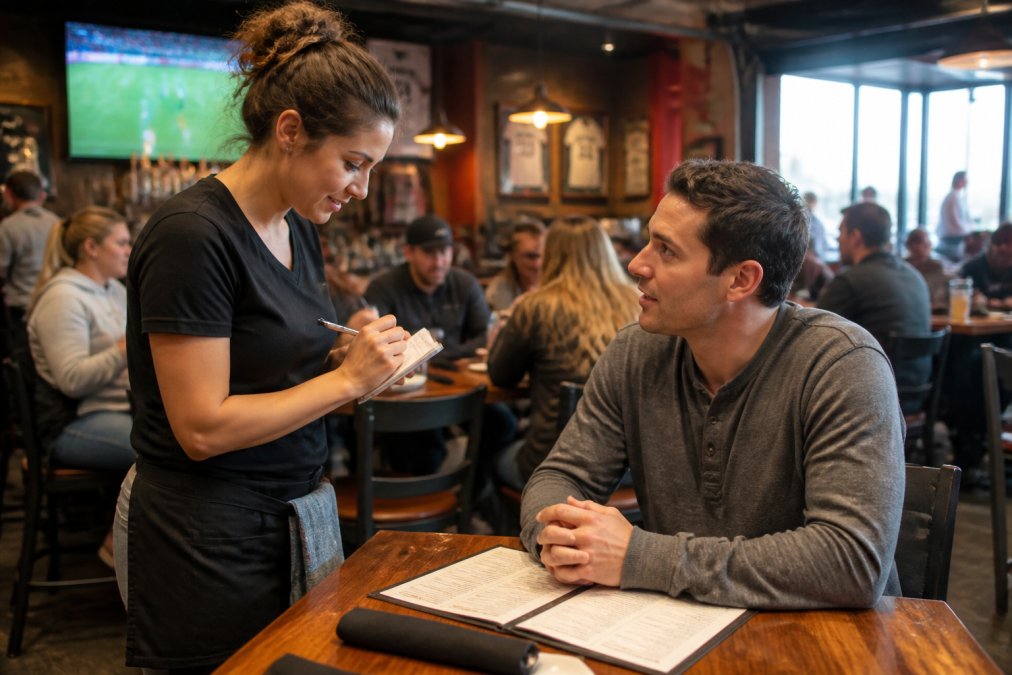
Asking the right questions about gluten-free ingredients when ordering is where most people fail. They ask, "Do you have gluten-free options?" and accept a vague "yes." That's not enough.
Instead, ask specific questions:
- "Does this dish contain any wheat, barley, or rye?"
- "Is this prepared on a separate surface or in a dedicated fryer?"
- "What oil is used in the fryer? Is it shared with breaded items?"
- "Can you confirm the sauces and seasonings don't contain gluten?"
The server needs to actually check with the kitchen, not guess. If they can't or won't verify, that's a red flag. A restaurant that takes dietary restrictions seriously will have staff trained to answer these questions or will connect you directly with a manager who can.
Many servers mean well but don't understand what cross-contamination means. They might say, "We can make it without the bun," and think that's safe. It's not. The real safety comes from knowing the entire preparation process, from ingredient sourcing to final plating.
Mid-West Mex Gluten-Free Options: A Regional Advantage
Mexican cuisine, especially the Mid-West Mex style that blends authentic traditions with Midwestern comfort, offers natural gluten-free advantages that other cuisines don't.
Corn tortillas are naturally gluten-free.
Safe Bar Food Choices: What You Can Actually Eat
Most bar food served at typical establishments is a minefield of hidden gluten, which is why gluten free sports bars require extra scrutiny. Fried foods are breaded. Sauces contain flour. Even salad dressings sometimes have gluten thickeners. The challenge intensifies during game day, when kitchens are operating at peak volume and shortcuts become tempting.
Foods That Are Naturally Gluten-Free (When Prepared Safely)
- Grilled proteins (chicken, steak, fish) without breading or marinades containing gluten
- Corn tortillas with guacamole, salsa, and grilled meat
- Rice and beans prepared without flour-based thickeners
- Fresh vegetables and salads with oil-and-vinegar dressing (verify the dressing first)
- Fruit and cheese plates
- Eggs prepared without shared cooking surfaces
What to Avoid Entirely
- Anything breaded or fried (unless in a dedicated fryer)
- Burgers with regular buns
- Wings with flour-based sauces or breading
- Pasta dishes
- Most appetizers (nachos with flour-based cheese sauce, fried pickles, etc.)
- Beer (unless specifically labeled gluten-free)
Game Day Ordering Strategy: Simplicity Is Safety
The Mid-West Mex Advantage
The Safest Choice
Questions to Ask Your Server Before You Order
Don't rely on assumptions. Ask these questions every single time, even at restaurants you've visited before. Staff changes, procedures change, and shortcuts happen.
- "Can you check with the kitchen about how this dish is prepared?"
- "Is there a manager or chef I can speak with about my celiac disease?"
- "Do you have a separate fryer for gluten-free items?"
- "Are sauces and dressings made in-house or pre-made?"
- "What oil is used in the fryer, and is it shared with breaded foods?"
- "Can you confirm the ingredients in the seasoning blend?"
- "Will this be prepared on a separate cutting board and with clean utensils?"
Spotting Red Flags and Building Your Safety Checklist
Before you order, assess whether the restaurant can actually handle your needs. Red flags include:
- No separate fryer for gluten-free items
- Shared prep surfaces with no clear separation
- Staff who seem unfamiliar with celiac disease or cross-contamination
- Menus with no clear allergen information
- Servers who guess instead of checking
- A kitchen that's too chaotic to maintain protocols during peak hours
- No written procedures for gluten-free preparation
Here's your pre-order safety checklist:
- Does the restaurant have a dedicated fryer or separate cooking area?
- Did the server check with the kitchen, not just look at the menu?
- Can they confirm the specific ingredients and preparation method?
- Are they aware of cross-contamination risks?
- Did a manager or chef speak with you directly?
- Do they have written allergen information available?
- Does the kitchen seem organized enough to maintain safety protocols during busy times?
Conclusion
Eating safely with celiac disease or gluten sensitivity at sports bars requires more than just knowing which menu items are gluten-free. It means understanding the real risks of cross-contamination, asking specific questions, and recognizing when a restaurant isn't equipped to meet your needs.
Frequently Asked Questions
What are the most common gluten-free items found at sports bars?
Most sports bars offer grilled proteins (chicken, steak, fish), rice, beans, corn tortillas, salads with careful dressing selection, and eggs. At venues with dedicated fryers or careful kitchen protocols, fried options like corn chips and certain appetizers may be safe. Always verify preparation methods and cross-contamination risk with your server before ordering, since bar kitchens often share equipment for wheat-containing items.
How can I safely order gluten-free food in a busy sports bar environment?
Arrive during slower periods if possible to get dedicated kitchen attention. Clearly state 'I have celiac disease' or 'severe gluten sensitivity' rather than just saying 'gluten-free', this signals food safety, not preference. Ask specific questions about dedicated fryers, separate prep surfaces, and whether staff can verify ingredients. Request your food be prepared first or on a separate station to minimize cross-contact risk during high-volume service.
Are corn tortillas at Mexican-style sports bars naturally gluten-free?
Corn tortillas are naturally wheat-free, but they can still pose a cross-contamination risk if they're prepared on shared surfaces, handled with contaminated utensils, or stored near wheat flour. Some restaurants add wheat-based ingredients to corn tortilla dough or fry them in shared oil. Always ask how the tortillas are stored, prepared, and whether the kitchen maintains separate handling for gluten-free orders. Locally made corn tortillas may offer better transparency about ingredients and preparation.
What questions should I ask your server about cross-contamination?
Ask: 'Do you have a dedicated fryer for gluten-free items?' 'Can my food be prepared on a separate cutting board and with clean utensils?' 'How are ingredients stored, are they separated from wheat products?' 'Can the kitchen verify that sauces, seasonings, and marinades don't contain hidden gluten?' 'Who in the kitchen has training on cross-contamination prevention?' These questions help you assess whether the kitchen takes dietary restrictions seriously and has protocols in place.